Prompt optimization has become a vital part of working effectively with large language models (LLMs) like ChatGPT, Claude, and Gemini. Whether you're building AI-powered applications, writing content, conducting research, or just looking to generate better outputs, the way you structure your prompts can make all the difference. In February 2026, modern prompt optimizers go well beyond simple rephrasing — they help teams rewrite prompts for clarity and token efficiency, compare outputs across models, run evaluations against datasets, and track regressions as models or tools change. This makes them incredibly useful for developers, marketers, researchers, and operators who want more consistent results without manual trial-and-error. With features like automatic scoring, prompt version control, observability dashboards, and CI-friendly testing workflows, today’s prompt optimization platforms improve output quality while also reducing cost and iteration time. This guide compares the best free and paid AI prompt optimization tools on the market, helping you choose a solution that fits your workflow — from casual prompt refinement to production-grade experimentation and monitoring.
Best Paid AI Prompt Optimizers
| Rank | Tool | Strength | Price | Limits |
|---|---|---|---|---|
| #1 | PromptLayer | Prompt management, evals, and versioning | From $49/month | Request + evaluation limits vary by plan |
| #2 | LangSmith | Tracing + evaluations to improve prompt quality | Usage-based (starts low) | Costs scale with traces/evals and volume |
| #3 | Langfuse | Open-source prompt management + evals | From $29/month | Units/retention vary by tier (self-host available) |
| #4 | Humanloop | Enterprise prompt management + human-in-loop evals | Enterprise pricing | Designed for teams; pricing depends on usage |
| #5 | Vellum | Prompt workflows + experiments + evals | From $25/month | Credits/retention and workflow capacity by plan |
PromptLayer
PromptLayer is a production-friendly prompt management platform that helps you version prompts, track experiments, and understand what’s actually working over time. In February 2026, it remains a top pick for teams that want a clean workflow for storing prompt templates, monitoring request history, and running evaluations without duct-taping spreadsheets together. It’s especially useful when you’re iterating across multiple models or prompt variants and need clear visibility into changes, outputs, costs, and success rates. PromptLayer fits developers and AI product teams who care about reproducibility — you can compare prompt variants side by side, keep a full change history, and build a reliable prompt pipeline that evolves safely as your application grows.
LangSmith
LangSmith is LangChain’s platform for tracing, debugging, and evaluating LLM applications — and it’s extremely effective for prompt optimization when you need to see what’s happening inside real runs. It captures prompt–completion pairs, provides trace visualizations (especially helpful for agents and multi-step chains), and supports evaluations to measure quality across datasets or real traffic. This makes it ideal for teams that want to move from “this prompt feels better” to “this prompt consistently performs better.” If your workflow includes iterative prompting, RAG pipelines, or agent behavior, LangSmith helps you identify regressions quickly, compare prompt versions, and collaborate on improvements with real evidence instead of guesswork.
Langfuse
Langfuse is an open-source LLM engineering platform that combines prompt management, tracing, evaluation, and metrics — making it a strong “all-in-one” prompt optimization choice in 2026. It’s especially valuable if you want prompt versioning, labels, and a prompt playground while also tracking usage and output quality over time. Teams can run experiments, create datasets for evaluation, and monitor prompt performance with cost and latency visibility. One of Langfuse’s biggest advantages is flexibility: you can use the managed cloud plans for speed, or self-host for maximum control. If you want prompt optimization that scales from experimentation to production monitoring (without being locked into a single ecosystem), Langfuse is a standout.
Humanloop
Humanloop is a premium platform aimed at teams shipping high-stakes LLM features that require strong evaluation workflows, collaboration, and oversight. It’s built for organizations that need prompt management with real governance: version controls, controlled deployments, and robust evaluation tooling that supports both automated scoring and human review. That makes it ideal for domains where accuracy and consistency matter (legal, support, healthcare, finance, compliance-heavy product teams), or anytime you want structured experimentation and approval rather than ad-hoc prompt edits. Humanloop is less about casual prompt rewriting and more about building a reliable prompt program — where improvements are measurable, regressions are caught, and teams can iterate confidently.
Vellum
Vellum focuses on building and optimizing prompt-driven workflows using a developer-friendly platform that supports experiments, evaluations, and production readiness. It’s especially useful when prompt optimization isn’t just about a single chat prompt, but about chains of steps, structured outputs, and repeatable workflows that need testing over time. In 2026, Vellum stands out for teams that want an organized environment to iterate quickly, compare results, and create a smoother bridge from prototype to production. If you’re building AI features that require consistent formatting, multi-stage prompting, and controlled iteration, Vellum gives you a practical workflow for improving prompt performance while keeping the system understandable and maintainable.
Best Free AI Prompt Optimizers
| Rank | Tool | Strength | Limitations |
|---|---|---|---|
| #1 | promptfoo | Open-source prompt testing + evals (CI-friendly) | Requires setup; best for technical users |
| #2 | Langfuse (Free) | Prompt management + tracing starter tier | Retention/units capped on free plan |
| #3 | PromptPerfect (Free) | Quick prompt rewrites for clarity and structure | Daily usage is limited on free access |
| #4 | FlowGPT (Free) | Large community prompt library + remixing | Limited analytics and quality control vs pro tools |
| #5 | PromptHero | Searchable gallery of optimized prompt examples | Discovery-focused (no built-in testing/evals) |
promptfoo
promptfoo is one of the best free prompt optimization tools in 2026 for developers who want a repeatable way to test prompts instead of relying on gut feel. It’s an open-source CLI and library that lets you evaluate prompts, agents, and RAG pipelines against structured test cases and scoring rules. You can compare outputs across multiple models, run experiments locally, and integrate tests into CI so regressions are caught early. It’s especially valuable when you care about consistency (format, tone, safety constraints, correctness) and want a tool that treats prompt changes like real engineering changes. While it requires some setup and is more technical than “one-click” optimizers, it’s incredibly powerful for serious prompt iteration.
Langfuse (Free)
Langfuse’s free tier is a strong option if you want to start tracking prompt versions and performance without committing to a paid platform immediately. You can capture traces, understand how different prompt versions behave, and begin organizing prompts with labels and history. For teams or builders who want prompt optimization to be measurable — not just subjective — Langfuse provides a clear path from experimentation to production monitoring. The free plan is naturally capped by retention and included usage, but it’s still an excellent starting point for learning how to build prompt iteration loops that rely on data rather than memory.
PromptPerfect (Free)
PromptPerfect is a fast, beginner-friendly option for improving prompt clarity and structure when you don’t want to build an entire evaluation workflow. Its free access is best for quick one-off rewrites: you paste a prompt, choose your target style or intent, and get a refined version that’s often more explicit and better formatted. This can be especially helpful when you’re trying to reduce ambiguity, improve instruction hierarchy, or tighten prompts for token efficiency. While advanced features like higher limits, deeper testing, and broader optimization workflows are reserved for paid tiers, the free experience is still valuable for casual users and creators who just want better prompts in minutes.
FlowGPT (Free)
FlowGPT is a popular community hub for discovering prompts and learning how other users structure high-performing instructions. The free tier gives you access to a massive prompt library across writing, coding, marketing, productivity, and more — and the ability to remix prompts into your own workflows. For many users, the biggest “optimization” advantage is pattern recognition: you quickly see what makes prompts work (role framing, constraints, examples, formatting, and step-by-step requirements). While FlowGPT isn’t a rigorous evaluation platform and doesn’t offer production-grade versioning by default, it’s excellent for inspiration, rapid iteration, and building a personal prompt playbook from proven community patterns.
PromptHero
PromptHero is a prompt discovery engine that’s especially useful for creative prompting, with a large searchable database of prompts across popular generative tools. Even though it’s not an evaluation platform, it’s still a valuable “optimizer” in practice because it helps you find prompt structures that consistently produce certain styles, formats, or outcomes. You can study patterns, adapt phrasing, and borrow useful elements like composition rules, style tokens, and constraint-based prompting. PromptHero is ideal for creators who want faster results without reinventing the wheel — and for anyone who learns prompt engineering best by seeing real examples and then iterating from there.
Rankings

Chatbots
AI chatbots have quickly evolved from simple assistants into powerful, multi-purpose tools used by millions of people every day...

Image Generators
AI image generators are revolutionizing the way creatives, marketers, and developers produce visual content by transforming text prompts into detailed, customized...

Writing Assistants
AI writing assistants have become indispensable tools for anyone who writes — from students and bloggers to business professionals and marketers...

Deepfake Detection
As deepfake technology becomes more advanced and accessible, detecting AI-manipulated content is now a critical challenge across journalism, education, law, and...

Productivity & Calendar
AI productivity and calendar tools have become essential for professionals, entrepreneurs, and students looking to make the most of their time without getting overwhelmed...
Natural Language To Code
Natural language to code tools are transforming software development by enabling users to build apps, websites, and workflows without needing advanced programming...
Blog
How AI Actually Works
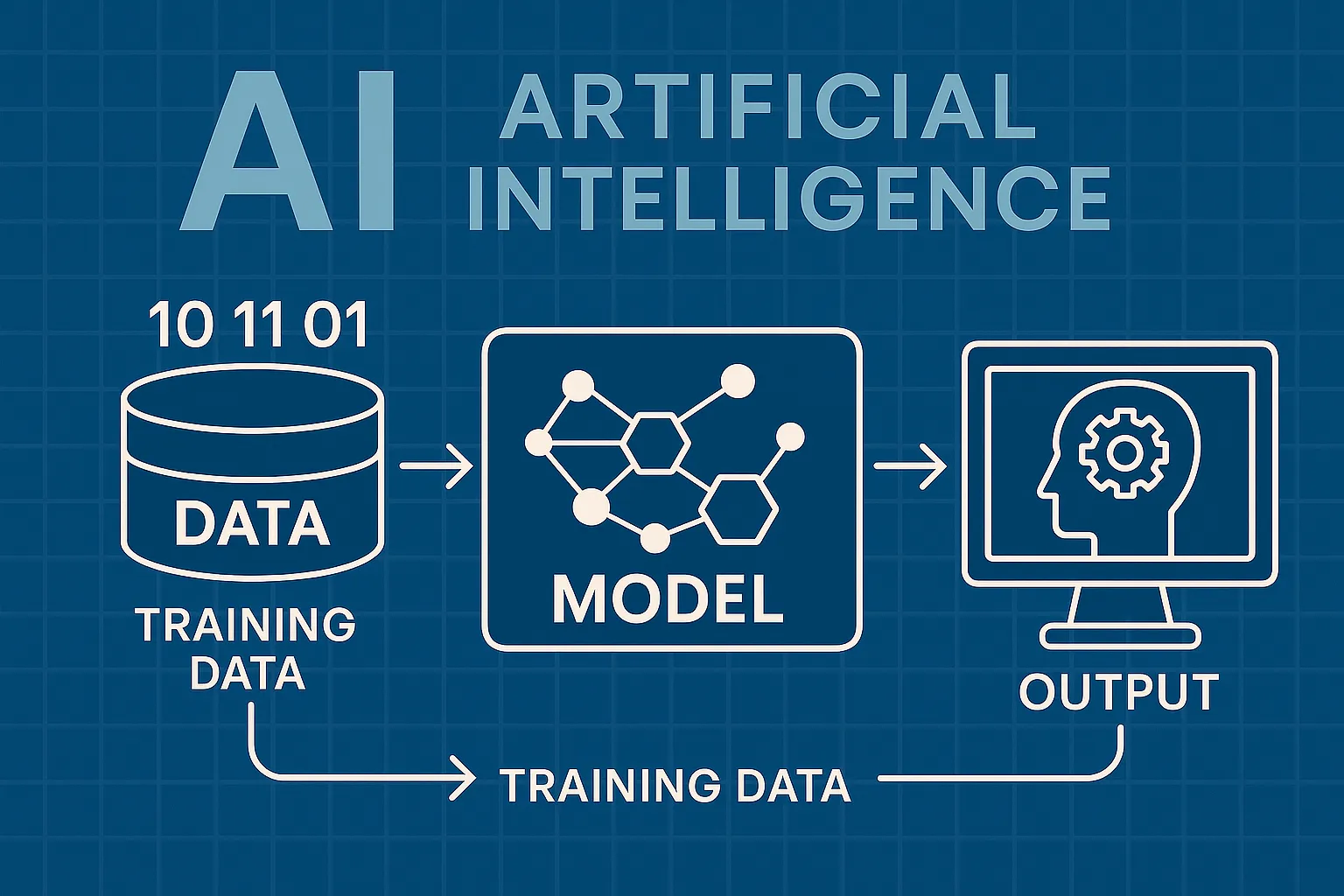
Understand the basics of how AI systems learn, make decisions, and power tools like chatbots, image generators, and virtual assistants.

What Is Vibe Coding?
Discover the rise of vibe coding — an intuitive, aesthetic-first approach to building websites and digital experiences with help from AI tools.

7 Common Myths About AI
Think AI is conscious, infallible, or coming for every job? This post debunks the most widespread misconceptions about artificial intelligence today.

The Future of AI
From generative agents to real-world robotics, discover how AI might reshape society, creativity, and communication in the years ahead.

How AI Is Changing the Job Market
Will AI replace your job — or create new ones? Explore which careers are evolving, vanishing, or emerging in the AI-driven economy.

Common Issues with AI
Hallucinations, bias, privacy risks — learn about the most pressing problems in current AI systems and what causes them.