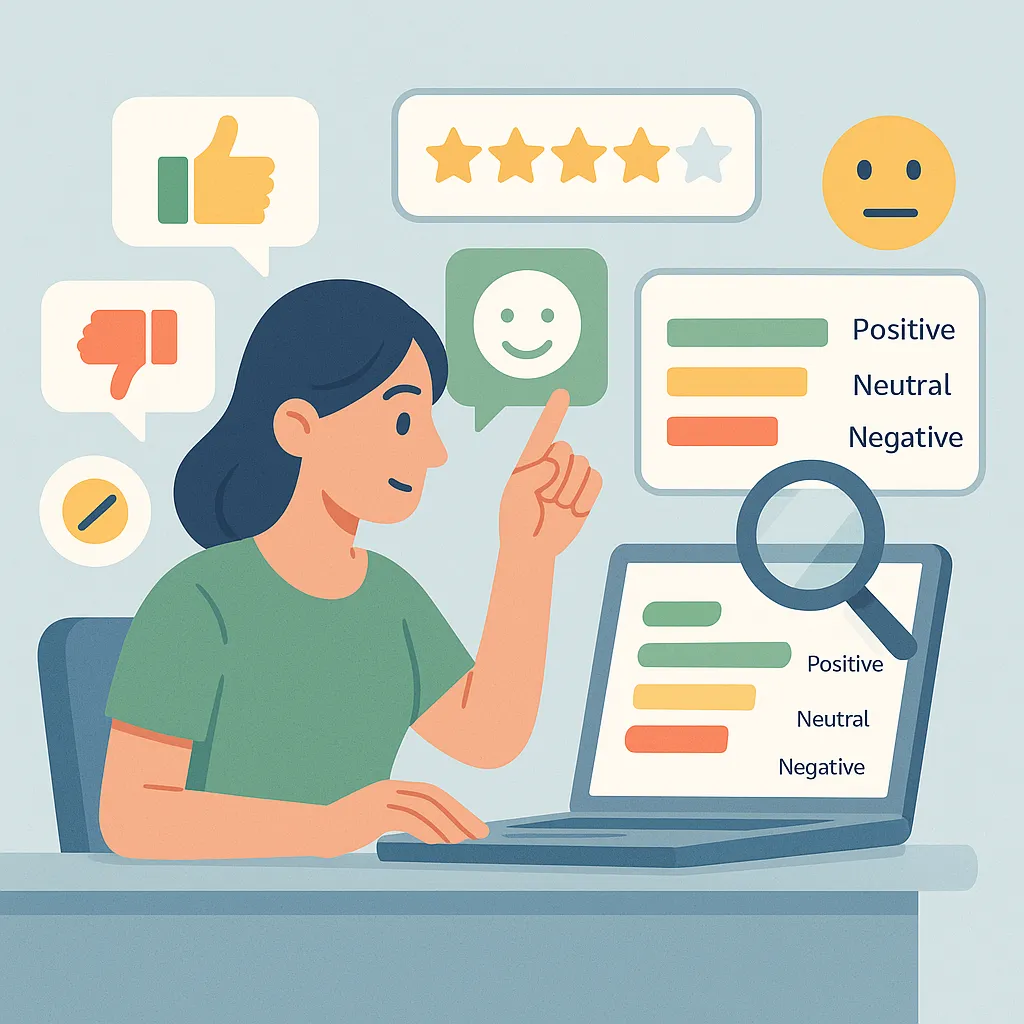
Customer feedback is a goldmine of insights—if you have the right tools to interpret it. AI-powered feedback analysis platforms help businesses uncover trends, spot pain points, and understand customer sentiment at scale. Instead of manually combing through reviews, surveys, or support tickets, these tools use natural language processing and machine learning to detect themes, measure satisfaction, and track emerging issues in real time. Whether you’re trying to reduce churn, improve your product roadmap, or optimize customer support, AI feedback analysis tools provide the clarity needed to act fast and strategically. They’re especially useful for CX teams, product managers, and marketers who need to turn qualitative input into quantifiable results. This page ranks the best free and paid AI tools for analyzing customer feedback in 2026—each selected for its ability to deliver actionable insights, streamline workflows, and scale with your business needs. Explore the top solutions below to better understand what your customers are really saying—and how to respond effectively.
Top Paid Feedback Analysis Tools
| Rank | Tool | Core Feature | Pricing | Best For |
|---|---|---|---|---|
| #1 | Chattermill | Unified VoC insights across channels | Custom quote | Enterprise CX + product alignment |
| #2 | Medallia Text Analytics | Enterprise text analytics + trend alerts | Custom quote | Large orgs with omnichannel feedback |
| #3 | Qualtrics XM Discover | Experience intelligence for unstructured feedback | Custom quote | VoC programs tied to surveys + journeys |
| #4 | Thematic | Theme detection & sentiment clustering | Custom quote | Survey/NPS open-text analysis |
| #5 | SentiSum | AI-native VoC with early churn signals | From $3,000/month | Fast-moving brands & support-led insights |
Chattermill
Chattermill is an enterprise-grade customer experience intelligence platform built to unify feedback from surveys, app reviews, support tickets, social media, and other voice-of-customer channels into one decision-ready view. Its AI automatically tags themes, measures sentiment, and highlights what’s driving satisfaction, churn risk, and recurring complaints—so teams can prioritize the highest-impact fixes instead of relying on anecdotal evidence. Where Chattermill shines is cross-functional alignment: CX leaders can connect insights to operational changes, while product teams can map customer language directly to roadmap initiatives. The platform is designed for scale, with workflows and dashboards that help organizations track trend movement over time, identify emerging issues early, and keep stakeholders focused on measurable customer outcomes. If you’re looking for a premium “single source of truth” for qualitative feedback that can be rolled out across departments, Chattermill remains one of the strongest options in 2026.
Medallia Text Analytics
Medallia Text Analytics is a powerful enterprise option for organizations that want to analyze massive volumes of customer and employee feedback with consistent governance, automation, and real-time alerting. It’s designed to ingest unstructured text from many sources—surveys, reviews, digital interactions, emails, contact center notes, and more—then surface actionable themes and emerging trends through AI-driven categorization. Medallia stands out for operationalization: teams can build workflows that route insights to the right owners, trigger alerts when sentiment or a key topic shifts, and support continuous improvement programs at scale. This makes it a strong fit for businesses that treat feedback analysis as an ongoing system (not a one-off research task) and want leadership-ready reporting plus day-to-day visibility for frontline teams. Pricing is typically custom, but the value comes from enterprise depth, breadth of data coverage, and mature CX tooling.
Qualtrics XM Discover
Qualtrics XM Discover is a strong choice for teams that already run surveys and experience programs in Qualtrics (or want a broader experience management layer on top of customer feedback). XM Discover focuses on analyzing unstructured feedback across multiple channels—cases, chats, voice transcriptions, emails, surveys, ratings/reviews, and social sources—then organizing it into themes, sentiment, and experience insights that can be monitored over time. The biggest advantage is ecosystem fit: Discover pairs naturally with survey programs, journey analytics, and executive dashboards, helping organizations connect “what customers say” to specific touchpoints and business outcomes. This is especially valuable when you need consistent reporting across regions, business units, and customer segments, or when leaders expect standardized VoC governance. Pricing is typically custom, making it best for established programs that want a unified view of structured and unstructured experience data.
Thematic
Thematic is purpose-built for turning open-text feedback—especially NPS, CSAT, and survey comments—into clear, defensible themes you can track and act on. Rather than forcing teams to rely on rigid, pre-defined tags, Thematic uses AI to detect themes as they emerge, cluster similar feedback, and attach sentiment signals so you can understand not just what’s being mentioned, but how customers feel about it. It’s a strong fit for insights, research, and product teams that need trustworthy thematic analysis with the ability to slice results by segment, time period, or customer cohort. The platform is particularly helpful when feedback volumes are large enough to overwhelm manual tagging, but you still want transparency and consistency in how themes are defined and reported. If your primary challenge is survey-driven insight speed (and keeping trend tracking clean), Thematic remains a reliable paid option in 2026.
SentiSum
SentiSum is an AI-native Voice of Customer platform designed to unify customer signals across sources like support tickets, surveys, calls, reviews, social posts, and CRM notes—then translate that noise into clear, actionable drivers of churn, complaints, and product friction. In 2026, SentiSum’s value proposition is speed and operational relevance: it’s built to help fast-moving teams catch emerging issues early, understand root cause, and push insights to the right stakeholders before problems spread. This makes it especially attractive for support-led organizations (or product teams tightly connected to support) that want a reliable feedback “early warning system” instead of static dashboards. While it can support broader VoC initiatives, it’s particularly strong when the goal is to reduce repeat contacts, improve self-serve flows, and prioritize fixes that immediately impact retention and satisfaction. Pricing typically starts around $3,000/month, positioning it for teams that want high leverage from automated, always-on feedback intelligence.
Top Free Feedback Analysis Tools
| Rank | Tool | Function | Free Tier Limits | Best Use |
|---|---|---|---|---|
| #1 | ChatGPT (Free) | Summarization, themes, sentiment from pasted text | Usage limits vary by region/time | Quick, one-off analysis & synthesis |
| #2 | Google Gemini (Free) | Theme extraction & feedback summarization | Free access with usage limits | Fast summaries and rewrite-ready insights |
| #3 | Hugging Face Sentiment Demo | Browser-based sentiment scoring | Public demo; may be rate-limited | Testing sentiment models quickly |
| #4 | Orange Data Mining (Free) | Local text mining workflows (incl. sentiment) | No cloud limits (runs locally) | Non-coders analyzing larger datasets |
| #5 | VADER Sentiment (Open Source) | Rule-based sentiment for reviews & comments | No limits (library) | Lightweight, DIY sentiment pipelines |
ChatGPT (Free)
ChatGPT’s free plan is one of the most flexible “do-it-now” options for feedback analysis when you don’t need a full VoC platform. You can paste survey comments, app reviews, interview notes, or support ticket excerpts and ask for theme clusters, sentiment summaries, root-cause hypotheses, and prioritized action lists. It’s especially useful for turning messy qualitative text into structured outputs you can drop into a doc, slide deck, or backlog: common complaints, feature requests, friction points, and “what customers liked” can all be extracted in minutes. The key limitation is scale—this is not a bulk ingestion system with always-on dashboards—so it’s best for one-off analysis, sampling, or rapid internal reporting. If you want reliable results, a good workflow is to analyze in batches, ask for a consistent taxonomy (themes + subthemes), and request a short executive summary plus a “top opportunities” list. Free usage limits apply and can vary, but for quick insights it remains a strong option in 2026.
Google Gemini (Free)
Google Gemini is a solid free alternative for quickly summarizing customer feedback and extracting themes from text you paste in. For many teams, it’s most valuable as a “speed layer” on top of manual workflows: turn long reviews into bullet-point takeaways, rewrite raw comments into categorized insights, or generate a concise list of recurring issues and suggested next steps. Gemini is particularly convenient if your feedback already lives in Google-centric workflows, since it’s often used alongside Docs, Sheets, and everyday browser research. Like other general-purpose AI assistants, it won’t automatically connect to your helpdesk or continuously monitor all channels unless you’re using paid, integrated systems—but for fast qualitative synthesis, it’s very effective. Use it to create customer-language summaries for stakeholders, draft product feedback reports, and produce consistent “theme + example quotes” outputs that are easy to act on. Free access includes usage limits, so it’s best for lightweight or periodic analysis rather than constant processing.
Hugging Face Sentiment Demo
Hugging Face’s community-built sentiment demos are an easy way to sanity-check sentiment scoring without setting up any software. You can paste text into a browser-based interface and get quick positive/negative signals—useful for validating whether a chunk of feedback reads as frustrated, neutral, or enthusiastic before you build a larger workflow. This is especially handy for experimentation: compare how different writing styles (short reviews vs. long survey answers) perform, test edge cases like sarcasm, and see how model-driven sentiment differs from your team’s intuition. Because it’s a public demo environment, you shouldn’t paste sensitive customer data—stick to anonymized text or small samples. Also note that public Spaces can be rate-limited, paused, or temporarily unavailable depending on community hosting. Still, for quick testing and lightweight sentiment checks, it’s one of the simplest free tools available in 2026 and a great “first step” before committing to an API or a paid platform.
Orange Data Mining (Free)
Orange is a free, open-source desktop tool that lets non-technical users build data analysis workflows visually—making it a surprisingly strong option for feedback analysis when you want more scale than a chat-based tool can comfortably handle. With Orange’s text mining widgets (including sentiment analysis), you can load CSV exports of reviews, survey responses, or ticket notes and then run repeatable pipelines: clean text, extract keywords, cluster themes, and score sentiment—without writing code. Because Orange runs locally, you’re not dealing with monthly API limits or cloud quotas, and it can be a better fit for privacy-sensitive workflows (assuming your machine is secure and your exports are handled responsibly). It’s best for teams that want a “free but structured” approach: consistent processing steps, saved workflows, and more control than copy/paste analysis. If you regularly export feedback from tools like your helpdesk or survey platform, Orange can serve as a practical bridge between spreadsheets and enterprise VoC software.
VADER Sentiment (Open Source)
VADER (Valence Aware Dictionary and sEntiment Reasoner) is a well-known open-source sentiment approach that’s fast, lightweight, and easy to integrate into simple feedback pipelines—especially if you’re comfortable with basic scripting or have a developer who can help. Unlike large ML models, VADER is rule-based and uses a tuned lexicon plus heuristics for punctuation and emphasis, which can work surprisingly well on short-form feedback like reviews, comments, and chat snippets. The benefit is control and reliability: it’s quick, has no usage costs, and can be embedded into internal tools, spreadsheets via scripts, or lightweight dashboards. The tradeoff is nuance—VADER won’t match enterprise-grade thematic intelligence, and sarcasm or domain-specific language can reduce accuracy. Still, for teams that want a free foundation for sentiment scoring (or a baseline to compare against paid platforms), VADER remains a useful option in 2026—especially when you combine it with simple keyword/topic grouping and a clear reporting template.
Rankings

Chatbots
AI chatbots have quickly evolved from simple assistants into powerful, multi-purpose tools used by millions of people every day...

Image Generators
AI image generators are revolutionizing the way creatives, marketers, and developers produce visual content by transforming text prompts into detailed, customized...

Writing Assistants
AI writing assistants have become indispensable tools for anyone who writes — from students and bloggers to business professionals and marketers...

Deepfake Detection
As deepfake technology becomes more advanced and accessible, detecting AI-manipulated content is now a critical challenge across journalism, education, law, and...
Productivity & Calendar
AI productivity and calendar tools have become essential for professionals, entrepreneurs, and students looking to make the most of their time without getting overwhelmed...
Natural Language To Code
Natural language to code tools are transforming software development by enabling users to build apps, websites, and workflows without needing advanced programming...
Blog
How AI Actually Works
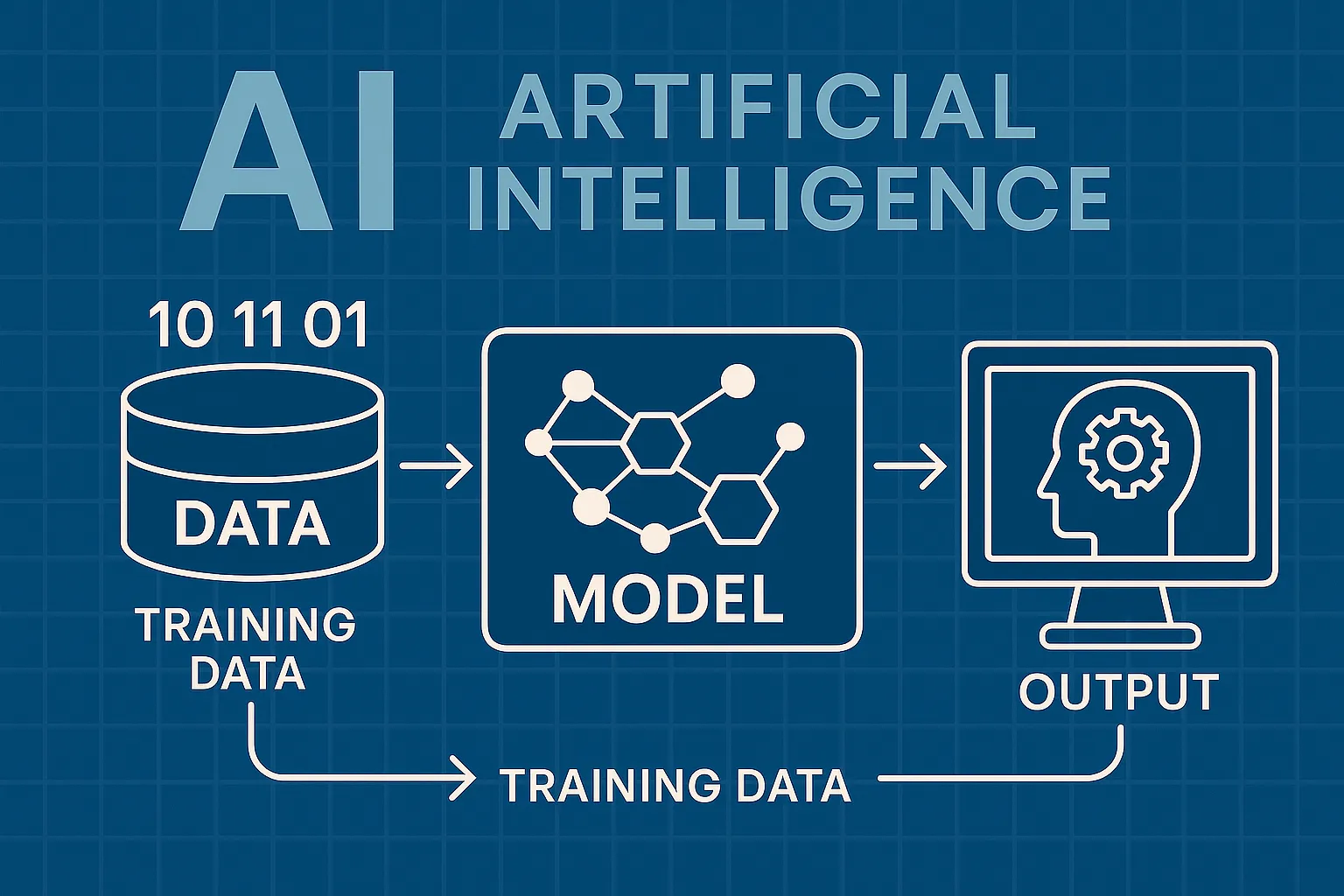
Understand the basics of how AI systems learn, make decisions, and power tools like chatbots, image generators, and virtual assistants.

What Is Vibe Coding?
Discover the rise of vibe coding — an intuitive, aesthetic-first approach to building websites and digital experiences with help from AI tools.

7 Common Myths About AI
Think AI is conscious, infallible, or coming for every job? This post debunks the most widespread misconceptions about artificial intelligence today.

The Future of AI
From generative agents to real-world robotics, discover how AI might reshape society, creativity, and communication in the years ahead.

How AI Is Changing the Job Market
Will AI replace your job — or create new ones? Explore which careers are evolving, vanishing, or emerging in the AI-driven economy.

Common Issues with AI
Hallucinations, bias, privacy risks — learn about the most pressing problems in current AI systems and what causes them.