AI customer service tools are rapidly transforming how companies engage with customers, reduce wait times, and provide consistent, high-quality support around the clock. From real-time chatbots and automated ticket routing to self-service portals and sentiment-aware email responses, these tools empower businesses to deliver faster and more accurate assistance. Whether you're a growing startup or an enterprise managing thousands of interactions daily, AI support platforms can help scale communication without compromising the personal touch. Many options now integrate seamlessly with CRMs, help desks, and messaging platforms, providing a unified view of the customer journey. In this guide, we explore the top AI-powered customer service tools—both free and paid—that improve resolution speed, increase agent productivity, and enhance the overall user experience while keeping support costs manageable.
Best Paid AI Customer Service Tools
| Rank | Tool | Strength | Price | Limits |
|---|---|---|---|---|
| #1 | Intercom (Fin AI Agent) | High-accuracy AI support + seamless handoff | From ~$0.99/resolution + Intercom seats | Resolution-based usage + plan/seat requirements |
| #2 | Zendesk AI | Ticket triage, agent assist, automated resolution | Suite + AI add-ons / usage-based AI options | Features vary by suite tier + AI add-ons |
| #3 | Salesforce Service Cloud (Agentforce for Service) | Enterprise AI agents inside Service workflows | $125/user/month (billed annually) | Salesforce ecosystem + licensing complexity |
| #4 | Ada | Omnichannel AI agent built for CX automation | Custom / enterprise pricing | Typically quote-based; best for larger volumes |
| #5 | Gorgias (AI Agent) | Ecommerce-first automation + support revenue tools | From $300/month + ~$0.90/resolution (annual) | Best for ecommerce workflows; automation usage-based |
Intercom (Fin AI Agent)
Intercom’s Fin AI Agent is one of the most polished “AI-first” support experiences available in early 2026, designed to resolve customer questions directly inside live chat while still feeling brand-consistent. Fin can pull answers from your help center and internal content, respond in a natural tone, and escalate to human agents when confidence is low or when a customer asks for a person. The big advantage is workflow fit: Fin lives inside Intercom’s broader inbox, routing, and customer context—so reps don’t lose conversation history when stepping in. This makes it especially strong for SaaS and subscription businesses where fast, accurate responses matter and handoff quality impacts churn. Pricing is commonly resolution-based (often cited around $0.99 per successful resolution) plus any Intercom plan/seat requirements, so it scales with volume and automation rate—great when it works well, but something to model carefully for high-ticket environments.
Zendesk AI
Zendesk AI is a top choice for teams that already run their support operation in Zendesk and want to layer AI into triage, routing, and agent workflows without rebuilding their stack. In practice, it shines at reducing time-to-first-response and improving consistency: AI can tag intent, suggest macros, summarize long threads, and help agents draft on-brand replies. For more advanced setups, Zendesk also supports AI-driven resolution flows that aim to deflect repetitive tickets (like password resets, policy questions, and simple troubleshooting) before they hit the queue. Because Zendesk pricing is often tiered and add-on heavy, it’s best for teams that value reliability, reporting, and enterprise controls—and are willing to pay for the right combination of suite tier plus AI capabilities. If your support spans multiple channels (email, chat, social, messaging), Zendesk’s unified approach is a major advantage for scaling.
Salesforce Service Cloud (Agentforce for Service)
Salesforce Service Cloud with Agentforce for Service is built for organizations that want AI agents embedded directly into their CRM-driven service process—where cases, entitlements, customer history, and workflows are already centralized. Rather than treating AI as a “bolt-on chatbot,” this approach is designed for end-to-end service execution: AI can assist with case creation, classification, knowledge retrieval, and next-best-action guidance, while maintaining enterprise governance and data controls. It’s especially compelling for large companies with complex product lines, regulated environments, or multi-team service operations (support, success, operations). If your service desk depends on Salesforce objects, reporting, and automation rules, keeping AI in the same system reduces fragmentation and improves adoption. Pricing is clearer than many enterprise tools on paper (often presented per user per month), but real-world deployments still depend on edition choices, add-ons, and how broadly you roll out agentic workflows.
Ada
Ada is a dedicated CX automation platform focused on deploying an AI agent that can handle high volumes of customer questions across channels (web chat, messaging, and more), with strong emphasis on knowledge integrations and safe escalation. One of Ada’s biggest strengths is how it connects to existing systems—such as Zendesk and Salesforce knowledge sources—so the AI can answer from the same content your team already maintains, while routing edge cases to humans when needed. This makes it a strong fit for mid-market and enterprise support teams that want meaningful deflection and consistent answers at scale, without relying purely on scripted flows. Ada is also well-suited to multilingual support and global operations where coverage and response quality matter across regions. Pricing is typically quote-based, so it’s best evaluated by running a pilot with your real ticket categories and measuring resolution rate, containment, and CSAT impact before committing.
Gorgias (AI Agent)
Gorgias is a standout for ecommerce customer support because it’s built around the realities of online retail: “Where’s my order?”, returns/refunds, subscription edits, discount issues, and product questions that tie directly into revenue. In 2026, Gorgias’ AI Agent approach is especially attractive because it prices automation around outcomes (resolved conversations) and is designed to plug into common ecommerce workflows and integrations. That means the automation isn’t just answering FAQs—it can help reduce repetitive tickets that typically drain support teams during promotions and seasonal spikes. For Shopify brands and DTC operators, this can translate into lower support costs, faster response times, and fewer abandoned carts due to unanswered pre-sales questions. The key tradeoff is that your total cost depends on ticket volume and automation rate, so it’s worth mapping your ticket mix and expected deflection before scaling up.
Best Free AI Customer Service Tools
| Rank | Tool | Strength | Limitations |
|---|---|---|---|
| #1 | Freshdesk (Free Program) | Real helpdesk + knowledge base for small teams | Free program is time/seat-limited; AI add-ons cost extra |
| #2 | Zoho Desk (Free Edition) | Email ticketing foundation for small support teams | Free plan is basic (limited automation/AI) |
| #3 | Tidio (Free + Lyro Starter Access) | Live chat + lightweight AI agent testing | AI conversation quota is small; advanced features paid |
| #4 | Crisp (Free) | Simple live chat + shared inbox for early-stage teams | AI automation is limited / mostly in higher tiers |
| #5 | Chatbase (Free Plan) | Embed a basic AI FAQ bot trained on your content | Low message credits; limited models/features |
Freshdesk (Free Program)
Freshdesk is one of the best “real helpdesk” options for teams that want structure (tickets, categories, SLAs, reporting, and a knowledge base) without paying upfront. In early 2026, Freshworks promotes a free program designed for very small teams, which can be ideal if you’re just setting up support operations and need a central inbox plus basic workflows. You can start with email-based ticketing, build a help center for deflection, and gradually introduce automation as your volume grows. While Freshdesk’s more advanced AI features (via Freddy add-ons) are paid, the free program is still valuable for getting the fundamentals right—especially if you plan to scale into a more automated setup later. If you’re moving from a shared Gmail inbox or scattered DMs, Freshdesk is a clean upgrade path.
Zoho Desk (Free Edition)
Zoho Desk’s Free Edition is a solid entry point for small teams that mainly need organized email ticketing and a lightweight support workflow. It’s built for getting your support process out of spreadsheets and into a proper system: you can track conversations, assign ownership, and keep customer history in one place. While Zoho’s more advanced AI and automation capabilities are generally reserved for paid tiers, the free plan still makes it easier to stay responsive and consistent—especially when multiple people handle customer email. If you’re already using other Zoho products, it’s also a natural fit because you can grow into Zoho’s broader suite over time without a full platform switch.
Tidio (Free + Lyro Starter Access)
Tidio is a strong “try AI support quickly” option for small businesses because it combines live chat with a straightforward path to AI automation. In 2026, Tidio’s pricing page highlights that you can access a limited number of Lyro AI Agent conversations for free, letting you test whether an AI agent can handle your most common questions before you commit to a paid quota. That makes it ideal for ecommerce shops, service businesses, and startups that want to reduce repetitive support without adding headcount. The key is to use the free access strategically: train it on your top 10–20 FAQs, check accuracy, and monitor where it fails so you can decide if an upgrade will actually save time. Even if you don’t upgrade immediately, Tidio’s chat and basic automations can still improve responsiveness.
Crisp (Free)
Crisp offers a genuinely usable free plan for live chat and a shared inbox, making it a great choice for founders and small teams who need a simple way to respond quickly on-site. It’s not a full “AI agent” solution on the free tier, but it helps solve the first support problem most small businesses face: keeping conversations centralized and responding fast. Crisp works well for early-stage support where most requests are straightforward and a human can handle them quickly—especially when you want to capture leads and help customers during checkout or onboarding. As your volume grows, Crisp can become a stepping stone into more advanced workflows and automations, but the free plan is best viewed as a clean live chat and inbox foundation.
Chatbase (Free Plan)
Chatbase is a practical option if your main goal is to embed a lightweight AI chatbot on your website that answers questions from your own docs, help center pages, or uploaded content. The free plan is intentionally limited, but it’s enough to validate the concept: set up an agent, train it on your key pages, and see whether it reduces repetitive questions. This makes Chatbase especially useful for small SaaS products, creators, or businesses with a clear documentation set and relatively predictable FAQs. The biggest limitation is message credits—so it’s best for low-traffic sites or for initial testing. If your bot proves useful, you can then decide whether paid credits and advanced actions are worth it based on measured deflection and customer satisfaction.
Rankings
Chatbots
AI chatbots have quickly evolved from simple assistants into powerful, multi-purpose tools used by millions of people every day...

Image Generators
AI image generators are revolutionizing the way creatives, marketers, and developers produce visual content by transforming text prompts into detailed, customized...

Writing Assistants
AI writing assistants have become indispensable tools for anyone who writes — from students and bloggers to business professionals and marketers...

Deepfake Detection
As deepfake technology becomes more advanced and accessible, detecting AI-manipulated content is now a critical challenge across journalism, education, law, and...
Productivity & Calendar
AI productivity and calendar tools have become essential for professionals, entrepreneurs, and students looking to make the most of their time without getting overwhelmed...
Natural Language To Code
Natural language to code tools are transforming software development by enabling users to build apps, websites, and workflows without needing advanced programming...
Blog
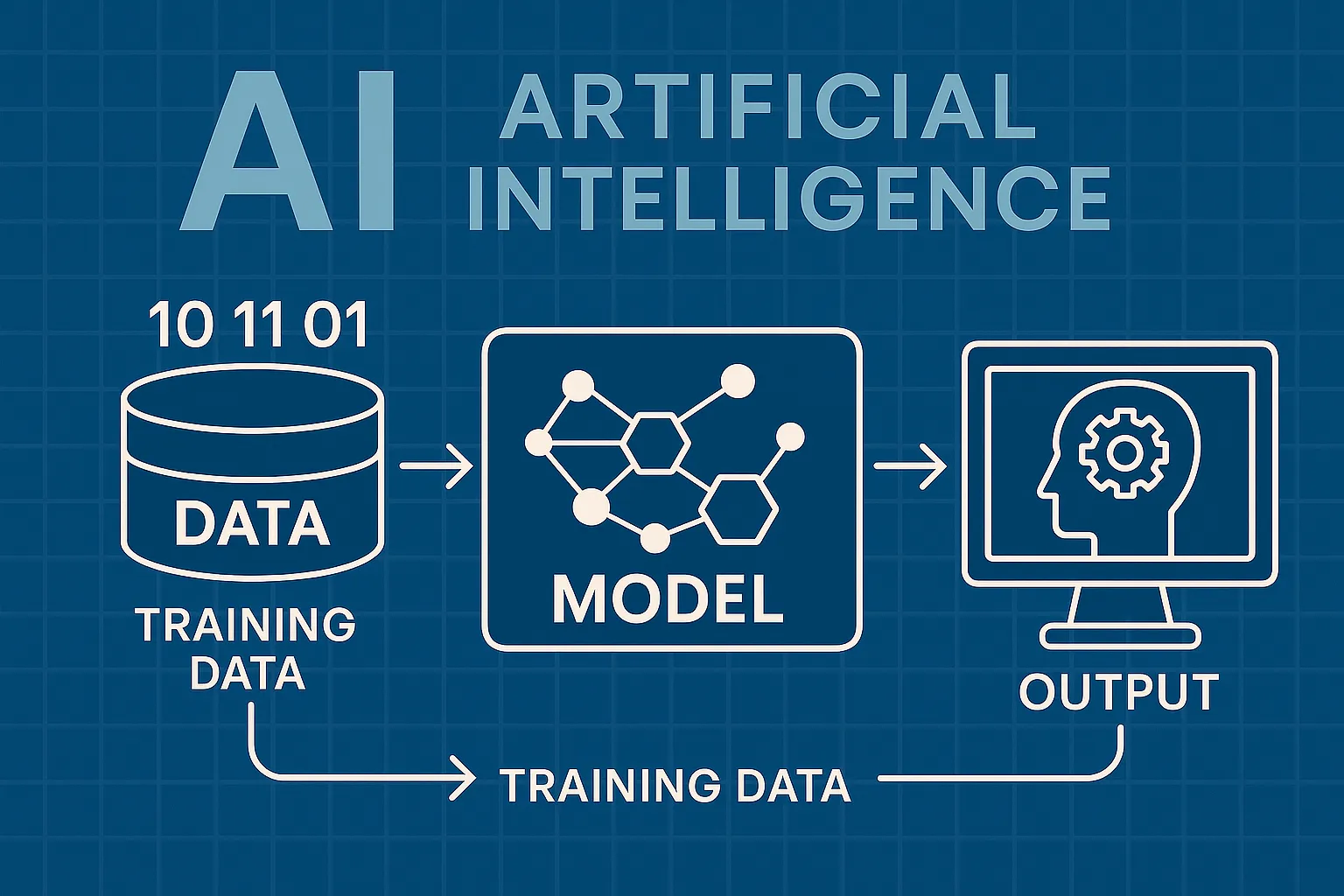
How AI Actually Works
Understand the basics of how AI systems learn, make decisions, and power tools like chatbots, image generators, and virtual assistants.

What Is Vibe Coding?
Discover the rise of vibe coding — an intuitive, aesthetic-first approach to building websites and digital experiences with help from AI tools.

7 Common Myths About AI
Think AI is conscious, infallible, or coming for every job? This post debunks the most widespread misconceptions about artificial intelligence today.

The Future of AI
From generative agents to real-world robotics, discover how AI might reshape society, creativity, and communication in the years ahead.
How AI Is Changing the Job Market
Will AI replace your job — or create new ones? Explore which careers are evolving, vanishing, or emerging in the AI-driven economy.

Common Issues with AI
Hallucinations, bias, privacy risks — learn about the most pressing problems in current AI systems and what causes them.