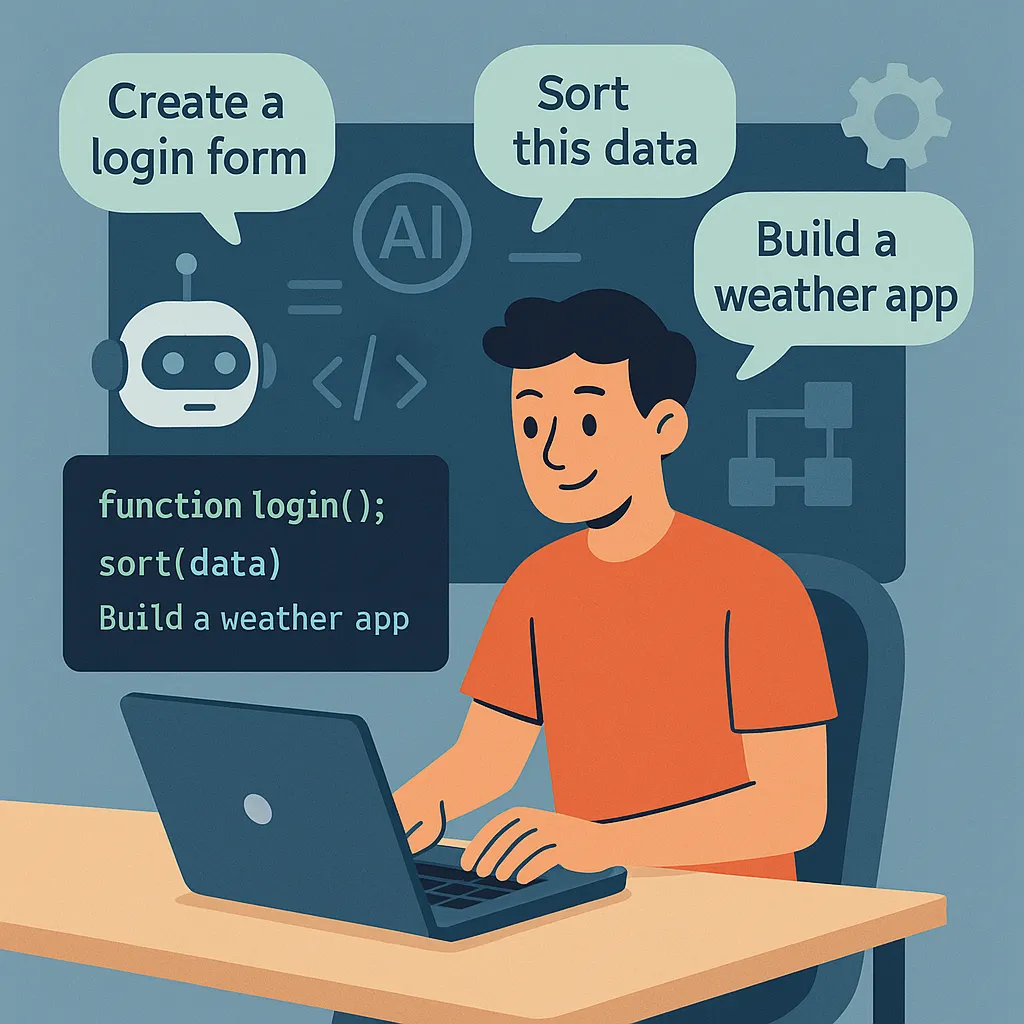
AI code generators are transforming the way developers write, understand, and manage code across projects of all sizes. By turning natural language prompts into functional code, these tools streamline everything from boilerplate generation to bug fixing, testing, and refactoring. Ideal for both beginners and experienced programmers, modern AI coding assistants can autocomplete functions, explain complex logic, suggest safer patterns, and even translate between programming languages or frameworks. Whether you're building web apps, shipping backend services, learning a new stack, or improving your productivity inside a professional IDE, these tools can drastically reduce development time while keeping quality high—when used with good review habits. Many now integrate deeply with environments like VS Code, JetBrains IDEs, terminals/CLIs, and cloud-based editors, making it easy to get started without changing your workflow. They’re also valuable for students and teams looking to prototype faster, onboard new contributors, and standardize conventions across large repos. In this guide, we’ve ranked the best AI code generators available as of February 2026, comparing both free and paid options based on speed, accuracy, language support, privacy controls, and integration strength to help you choose the right assistant for your needs.

Best Paid AI Code Generators
| Rank | Tool | Strength | Price | Use Case |
|---|---|---|---|---|
| #1 | GitHub Copilot | Best-in-class IDE autocomplete + chat | $10/month | Daily coding in VS Code/JetBrains |
| #2 | Cursor | AI-first editor with agents + repo context | $20/month | Fast feature builds + refactors |
| #3 | JetBrains AI | Deep IntelliJ/PyCharm integration + workflows | From $100/year | Teams living in JetBrains IDEs |
| #4 | Amazon Q Developer | Strong for AWS stacks + CLI/IDE coding help | $19/user/month | Cloud + DevOps + enterprise controls |
| #5 | Cody by Sourcegraph | Large-codebase understanding + code search synergy | Contact for pricing | Big repos, onboarding, enterprise teams |
GitHub Copilot
GitHub Copilot remains the go-to AI coding assistant for many developers because it’s fast, reliable, and deeply integrated into mainstream workflows. Inside editors like VS Code, JetBrains IDEs, and Neovim, Copilot generates high-quality completions as you type, suggests entire functions from comments, and helps reduce time spent on boilerplate. It’s especially strong when you keep your prompts specific (inputs/outputs, constraints, examples), and then review the output like you would a human teammate’s PR. Copilot also shines for “glue code” tasks—API clients, small utilities, test scaffolding, documentation snippets, and refactoring repetitive patterns. In real projects, the biggest productivity gains come from pairing autocomplete with chat-style assistance: asking it to explain unfamiliar logic, propose safer edge-case handling, or draft a clean implementation plan before coding. For students and professionals alike, Copilot is a practical daily driver that accelerates development without forcing you to learn a new editor or platform.
Cursor
Cursor is an AI-first code editor designed for developers who want more than autocomplete. Built around repo awareness and agent-style workflows, it can help you implement features across multiple files, refactor with broader context, and iterate quickly on large changes while keeping you in control. Cursor’s “Tab” completions feel snappy for day-to-day coding, while its chat and agent tools are better suited for tasks like building a new module, migrating code, or cleaning up architecture. A big advantage is how naturally it handles “make this change everywhere” requests—updating types, wiring endpoints, adjusting UI components, and syncing tests—without you hunting through the repo manually. It’s also useful for reading code: you can ask questions about a function or file, get explanations, and request safer alternatives. If your goal is speed—prototyping, shipping iterations, or rapidly exploring approaches—Cursor is one of the most effective paid options in 2026.
JetBrains AI
JetBrains AI is the most seamless choice if your workflow is centered on IntelliJ IDEA, PyCharm, WebStorm, GoLand, or other JetBrains IDEs. Instead of feeling like an add-on, it’s designed to fit directly into the JetBrains development experience: generating code in-place, improving documentation, suggesting refactors, and helping you understand complex code with minimal context switching. It’s particularly strong for structured, professional work—where you’re navigating large projects, relying on IDE inspections, and maintaining consistent conventions across a team. JetBrains AI can help draft clean implementations, suggest improvements based on the code around your cursor, and speed up routine engineering tasks like writing tests, generating commit messages, or summarizing changes. Another advantage is “workflow consistency”: teams already standardized on JetBrains can adopt AI assistance without forcing developers into a new editor. If you want AI that behaves like a natural extension of a mature IDE toolchain, JetBrains AI is a strong paid pick.
Amazon Q Developer
Amazon Q Developer is a strong option for developers and teams building on AWS or working heavily in cloud/DevOps environments. It provides AI-assisted coding in IDEs and the CLI, helping you draft code, fix issues, explain snippets, and accelerate tasks that normally require lots of documentation digging. Where Q Developer stands out is its “ecosystem fit”: if your day-to-day involves AWS services, infrastructure code, permissions, SDK usage, or operational workflows, Q’s guidance can be especially relevant. It’s also designed with enterprise management in mind—useful for organizations that need access controls, governance, and consistent tooling across teams. For practical development, Q can help write service integrations, automate repetitive setup steps, suggest safer patterns, and speed up incident response scripting. Like all AI coding tools, it still requires careful review, but for AWS-native stacks it can cut a meaningful amount of friction from building, securing, and maintaining applications.
Cody by Sourcegraph
Cody is built for serious, real-world codebases—especially the kinds that span many repositories, services, and years of history. Instead of operating only on the current file, Cody is designed to understand broader project context so it can answer questions like “where is this used?”, “what’s the correct pattern in this codebase?”, and “how do we implement this feature the way the rest of the system does it?” This makes it valuable for onboarding new engineers, working with legacy systems, and reducing the time spent navigating unfamiliar repositories. Cody pairs well with Sourcegraph’s code search and cross-repo intelligence, which helps teams locate relevant examples and conventions quickly. In day-to-day development, Cody can propose refactors, draft changes across multiple files, and generate higher-confidence suggestions when you need consistency with existing architecture. If your biggest pain is complexity—large repos, many services, or frequent context switching—Cody is one of the best enterprise-oriented AI code generators available.
Best Free AI Code Generators
| Rank | Tool | Strength | Limitations | Notes |
|---|---|---|---|---|
| #1 | GitHub Copilot (Free) | Modern Copilot experience with free tier access | Monthly caps on suggestions/requests | Best “free” IDE baseline |
| #2 | Codeium | Fast autocomplete + chat across many IDEs | Some advanced/team features are paid | Great for students & daily coding |
| #3 | Cursor (Hobby) | AI editor with a free plan for trying agents | Limited agent requests and completions | Excellent “try before you buy” |
| #4 | Amazon Q Developer (Free Tier) | IDE + CLI help with a perpetual free tier | Lower limits vs Pro and fewer advanced features | Strong for AWS learners |
| #5 | Continue (Open Source) | Bring-your-own-model coding assistant for VS Code/JetBrains | Quality depends on your chosen model/provider | Best for customization & control |
GitHub Copilot (Free)
GitHub Copilot’s free tier is one of the most compelling “starter” ways to experience modern AI-assisted coding inside a real IDE. You get the familiar Copilot workflow—inline suggestions, editor-aware completions, and Copilot chat-style help—without paying up front, which makes it ideal for students, hobbyists, and anyone evaluating AI code generation for the first time. The free tier is capped, so it’s best used strategically: rely on completions for routine code and reserve chat requests for moments where it matters most (designing a function signature, debugging a tricky error, or asking for a safe refactor plan). Used this way, Copilot Free can still deliver a noticeable boost in productivity, especially for boilerplate, small utilities, and learning new libraries or syntax. If you like the workflow and start hitting limits regularly, upgrading is straightforward—so Copilot Free works well as both a daily lightweight tool and a low-friction trial of the paid experience.
Codeium
Codeium is a popular free AI coding assistant that focuses on speed and accessibility. It delivers quick autocompletions across a wide range of languages and integrates with many common environments, including VS Code and JetBrains IDEs—making it easy to adopt without changing your setup. In practice, Codeium is especially useful for writing repetitive code faster: boilerplate, helper functions, data transformations, UI components, and test scaffolding. It’s also helpful when you’re learning: you can explore patterns, ask for clearer implementations, and iterate until the code makes sense. While some advanced features and team capabilities live behind paid plans, the free experience is strong enough for many solo developers and students. To get the best results, treat it like a smart pair programmer: provide constraints, review the output carefully, and ask for edge-case handling rather than trusting the first draft. If you want a capable free tool that feels “snappy” in day-to-day editing, Codeium is a standout.
Cursor (Hobby)
Cursor’s Hobby plan is a great way to test an AI-first editor without committing to a subscription. You can experience the core workflow—AI-powered completions, chat-based assistance, and a taste of agent-style coding—while still working in a familiar code editor environment. This is especially useful if you’re curious about “bigger than autocomplete” capabilities, like asking the editor to implement a feature across multiple files, refactor a component tree, or help you understand a new repo faster. The trade-off is that the free plan is limited, so it’s best for evaluation and occasional use rather than heavy daily workloads. A practical approach is to use Cursor Hobby for higher-leverage tasks: drafting a feature outline, getting help with a tricky refactor, or exploring an unfamiliar architecture—then finishing the details manually. If you end up liking the agent workflow and want higher limits, Cursor’s paid tiers are positioned as a natural upgrade from the Hobby experience.
Amazon Q Developer (Free Tier)
Amazon Q Developer’s Free Tier is a strong option if you’re learning AWS, building cloud-connected apps, or you simply prefer developer help that works well in both the IDE and the terminal. The free tier gives you ongoing access (with monthly limits) to coding assistance that can help generate snippets, explain errors, and speed up tasks that typically require lots of documentation searching. It’s particularly valuable for AWS-specific work: service integrations, SDK usage, infrastructure scripting, and common operational workflows. Even if you aren’t “all-in” on AWS, the ability to use Q-style help in the CLI can be a productivity boost for developers who live in terminals. The key limitation is usage: you’ll have fewer advanced interactions than paid users, so it’s best to treat it as a focused helper—use it to unblock yourself, clarify patterns, and draft safe starting points, then validate and refine as needed. For AWS-native learning and lightweight coding support, Q’s free tier is a solid pick.
Continue (Open Source)
Continue is one of the best free options for developers who want control. Instead of locking you into a single vendor, Continue is an open-source coding assistant that can plug into editors like VS Code and JetBrains while letting you choose the model/provider that powers it. That flexibility is powerful: you can optimize for cost, privacy, or specific model strengths depending on what matters most for your workflow. Continue supports common coding-assistant patterns—autocomplete-style help, chat, refactoring assistance, and code explanations—while keeping the setup customizable through configuration. The main downside is that your experience depends on the model you connect: some providers perform better at multi-file reasoning, others at fast completions, and some may require paid API usage. Still, for developers who want a “build your own Copilot” feel, Continue is hard to beat. It’s especially appealing to teams and individuals who value customization, prefer open tooling, or want to avoid being tied to a single AI platform long-term.
Rankings

Chatbots
AI chatbots have quickly evolved from simple assistants into powerful, multi-purpose tools used by millions of people every day...

Image Generators
AI image generators are revolutionizing the way creatives, marketers, and developers produce visual content by transforming text prompts into detailed, customized...

Writing Assistants
AI writing assistants have become indispensable tools for anyone who writes — from students and bloggers to business professionals and marketers...

Deepfake Detection
As deepfake technology becomes more advanced and accessible, detecting AI-manipulated content is now a critical challenge across journalism, education, law, and...

Productivity & Calendar
AI productivity and calendar tools have become essential for professionals, entrepreneurs, and students looking to make the most of their time without getting overwhelmed...
Natural Language To Code
Natural language to code tools are transforming software development by enabling users to build apps, websites, and workflows without needing advanced programming...
Blog

How AI Actually Works
Understand the basics of how AI systems learn, make decisions, and power tools like chatbots, image generators, and virtual assistants.

What Is Vibe Coding?
Discover the rise of vibe coding — an intuitive, aesthetic-first approach to building websites and digital experiences with help from AI tools.

7 Common Myths About AI
Think AI is conscious, infallible, or coming for every job? This post debunks the most widespread misconceptions about artificial intelligence today.

The Future of AI
From generative agents to real-world robotics, discover how AI might reshape society, creativity, and communication in the years ahead.

How AI Is Changing the Job Market
Will AI replace your job — or create new ones? Explore which careers are evolving, vanishing, or emerging in the AI-driven economy.

Common Issues with AI
Hallucinations, bias, privacy risks — learn about the most pressing problems in current AI systems and what causes them.