Applying to jobs can be time-consuming, repetitive, and overwhelming—especially when you're submitting dozens of applications each week. AI-powered auto-apply tools are changing that by streamlining the process from start to finish. These tools can automatically fill out job forms, tailor your resume and cover letter for each listing, and even track your application history across multiple platforms. For job seekers looking to maximize efficiency, reduce burnout, and increase their chances of landing interviews, AI job application assistants offer a significant advantage. Whether you're targeting internships, remote tech jobs, freelance gigs, or full-time corporate roles, these platforms make high-volume applications more manageable while maintaining personalization. This page covers the best free and paid AI tools that apply to jobs on your behalf, helping you save time and stay organized in a competitive job market. With automation on your side, you can focus on interview prep and career strategy instead of spending hours on repetitive form-filling and resume tweaks.
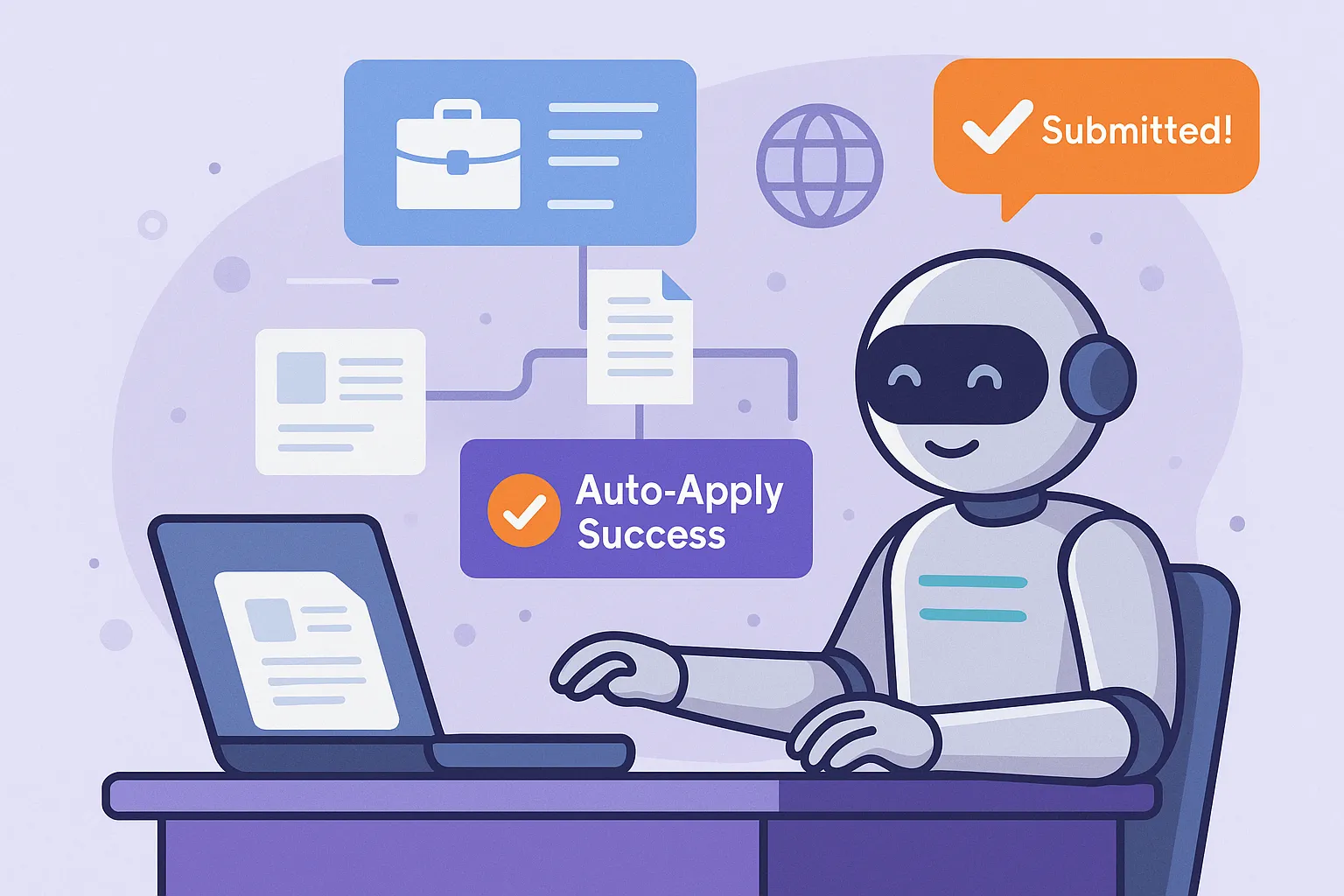
Top Paid AI Auto-Apply Tools
| Rank | Tool | Key Strength | Price | Best Use Case |
|---|---|---|---|---|
| #1 | JobCopilot | AI copilot that auto-fills and automates applications | From $0.93/day | High-volume applying with better targeting |
| #2 | Sonara | Hands-off job search + auto-apply workflows | From $23.95/month | “Set it and review” automation for busy seekers |
| #3 | LoopCV | Automated job discovery + email/form applying | From $19.99/month | Automated search loops across multiple sources |
| #4 | LazyApply | Chrome-based auto-apply for “Easy Apply” style listings | From $99/year | Casting a wide net on quick-apply platforms |
| #5 | AIApply | Resume + cover letter tailoring with optional auto-apply credits | Subscription + auto-apply credits | Tailored applications at scale (quantity + personalization) |
JobCopilot
JobCopilot is built for job seekers who want automation without turning applications into low-quality spam. Instead of making you manually retype the same data across dozens of ATS portals, it focuses on speeding up the repetitive parts: form filling, standard questions, saving jobs for review, and keeping everything organized in one workflow. The “copilot” approach is helpful for high-volume searches because you can still control what gets submitted while letting the platform handle the tedious steps that slow most people down. It’s especially useful for remote and tech-style roles where listings are plentiful and time matters. If you want to apply faster while keeping your process structured—so you can track what you sent, where, and why—JobCopilot is one of the more complete automation options available in 2026.
Sonara
Sonara is designed around “hands-off” job search automation: it learns what you’re aiming for, continuously looks for relevant openings, and helps push applications forward with far less manual work than a traditional job hunt. This can be a major advantage if you’re applying while working full-time, balancing school, or simply burned out from repetitive form submissions. Sonara is best when you treat it like a high-efficiency assistant: you still want to monitor matches, refine preferences, and ensure your resume details are correct, but you can dramatically reduce time spent on the boring parts of applying. For job seekers who want consistent application momentum every week, Sonara’s automation-first design makes it a strong paid option in 2026.
LoopCV
LoopCV is a job search automation platform built around “loops”—repeatable searches you set up once and let run continuously. You choose roles, locations, filters, and exclusions, and LoopCV searches across sources to find matching jobs, then applies through forms or outreach workflows depending on your setup. It’s useful for people applying to multiple job titles at once (for example, “Process Engineer,” “EIT,” and “Quality Analyst”) because you can run several focused loops instead of one broad search that produces noise. LoopCV also includes tracking and analytics so you can see how each loop performs over time, which helps you refine strategy rather than blindly applying. If you want structured automation with adjustable controls, LoopCV is a solid pick for 2026.
LazyApply
LazyApply is a Chrome-based automation tool aimed at “quick apply” style job boards where applications are often repetitive and form-driven. After you set up your resume details and preferences, it can help speed through large batches of listings by handling routine form fields and submissions. This makes it appealing for high-volume phases of a job hunt—especially when you’re applying broadly to entry-level roles, internships, or remote opportunities with standardized requirements. The key to using LazyApply well is controlling quality: review your profile inputs, avoid irrelevant listings, and periodically audit what’s being submitted so you don’t waste applications on poor matches. If your goal is maximum volume with minimal manual effort, LazyApply is one of the better-known automation options in this niche.
AIApply
AIApply combines two things many job seekers struggle to balance: personalization and scale. On one side, it offers AI-assisted resume and cover letter generation so your documents better match each job description (which can help with ATS keyword alignment). On the other side, it offers auto-apply functionality via credits, which is useful when you want to apply to many roles without rewriting everything from scratch each time. This “tailor + apply” approach is especially helpful for job seekers targeting competitive categories—like tech, marketing, or analyst roles—where a generic resume often underperforms. If you want automation but still care about sending applications that look role-specific (not copy-paste), AIApply is a strong paid option to consider in 2026.
Top Free AI Auto-Apply Tools
| Rank | Tool | Key Strength | Limitations | Best Use |
|---|---|---|---|---|
| #1 | Simplify Copilot (Free) | Fast autofill + resume parsing + tracking | Not a fully hands-off auto-apply service | Applying faster on ATS portals (Greenhouse, Lever, etc.) |
| #2 | Huntr (Free Plan) | Job tracker + tailored resumes + 1-click form fill | Advanced AI features are paid | Staying organized while accelerating applications |
| #3 | Careerflow.ai (Free Tools) | Autofill + job tracker + LinkedIn workflow helpers | Automation depth varies by platform and plan | Faster applications + tracking across job boards |
| #4 | Swooped (Free to Start) | Free job tracker + autofill extension + ATS tools | AI optimizations/advanced features can be limited | Free workflow: save jobs, autofill, and stay consistent |
| #5 | ChatGPT (Free) | Fast cover letters, bullets, and application answers | No autofill or auto-apply submission | Personalization at scale (while other tools handle submission) |
Simplify Copilot (Free)
Simplify Copilot is one of the most useful “free speed boosts” for job applications in 2026. Instead of trying to fully apply for you, it focuses on eliminating the biggest time-waster: repetitive form fields across ATS portals. With resume parsing and autofill, you can move through applications dramatically faster while still reviewing everything before submission. It also helps keep your job search organized by tracking what you applied to, which matters once you’re past 20–30 applications and details start blurring together. Simplify is especially strong for students, new grads, and anyone applying to a lot of roles on common ATS systems (where the questions repeat constantly). If you want to apply faster without handing over full control, Simplify is a top free choice.
Huntr (Free Plan)
Huntr combines job tracking with practical “apply faster” features, making it a great option when your biggest problem isn’t just writing—it’s staying organized and consistent. The free plan is useful for tracking applications in a clean dashboard, saving job details, and building resumes you can tailor over time. Huntr also emphasizes workflow tools (like clipping jobs from the browser and keeping contacts/notes attached to each role), which reduces the chaos that usually shows up mid-search. While the most advanced AI generation features are on paid plans, the free tier still delivers meaningful value for serious job seekers who want to speed up applications and keep everything in one place.
Careerflow.ai (Free Tools)
Careerflow.ai is a strong free option for job seekers who want a smoother, more structured application workflow—especially if you’re using LinkedIn heavily. It offers tools like autofill, tracking, and job-search organization features that reduce the friction of applying across multiple sites. The real advantage is workflow consistency: instead of jumping between spreadsheets, bookmarks, and tabs, you can track applications and move faster through repetitive steps. Careerflow’s exact automation depth can vary depending on the platform you apply on, but as a free toolset it’s a practical upgrade over manual processes. If you’re applying daily and want a more streamlined system without paying upfront, Careerflow is worth adding to your stack.
Swooped (Free to Start)
Swooped is built to support a modern “apply faster, stay organized” workflow with free entry-level access. It offers a job tracker (so you can manage roles, notes, documents, and next steps in one dashboard) and an autofill-focused browser extension that speeds up common application steps. It also includes ATS-style resume tools and free starter credits for AI features, which helps job seekers improve materials without immediately paying for a subscription. Swooped is best for people who want a single hub for job search organization and faster submissions, especially early in a job hunt when you’re building momentum and dialing in your positioning. For a free-to-start option that actually touches multiple parts of the workflow, it’s a solid 2026 pick.
ChatGPT (Free)
Even though ChatGPT doesn’t click “Submit” for you, it’s still one of the most valuable free tools for speeding up applications while keeping them personalized. You can use it to generate tailored cover letters, rewrite resume bullets to better match a role, craft short application answers (like “Why do you want this job?”), and quickly adjust your messaging for different industries. This is especially useful when you’re applying at scale but don’t want your applications to look generic. The best workflow is pairing ChatGPT with an autofill/tracking tool: let the extension handle repetitive form fields, and let ChatGPT handle the personalized content that improves quality. For free, it’s one of the best ways to increase your output without sacrificing relevance.
Rankings

Chatbots
AI chatbots have quickly evolved from simple assistants into powerful, multi-purpose tools used by millions of people every day...

Image Generators
AI image generators are revolutionizing the way creatives, marketers, and developers produce visual content by transforming text prompts into detailed, customized...

Writing Assistants
AI writing assistants have become indispensable tools for anyone who writes — from students and bloggers to business professionals and marketers...

Deepfake Detection
As deepfake technology becomes more advanced and accessible, detecting AI-manipulated content is now a critical challenge across journalism, education, law, and...

Productivity & Calendar
AI productivity and calendar tools have become essential for professionals, entrepreneurs, and students looking to make the most of their time without getting overwhelmed...
Natural Language To Code
Natural language to code tools are transforming software development by enabling users to build apps, websites, and workflows without needing advanced programming...
Blog
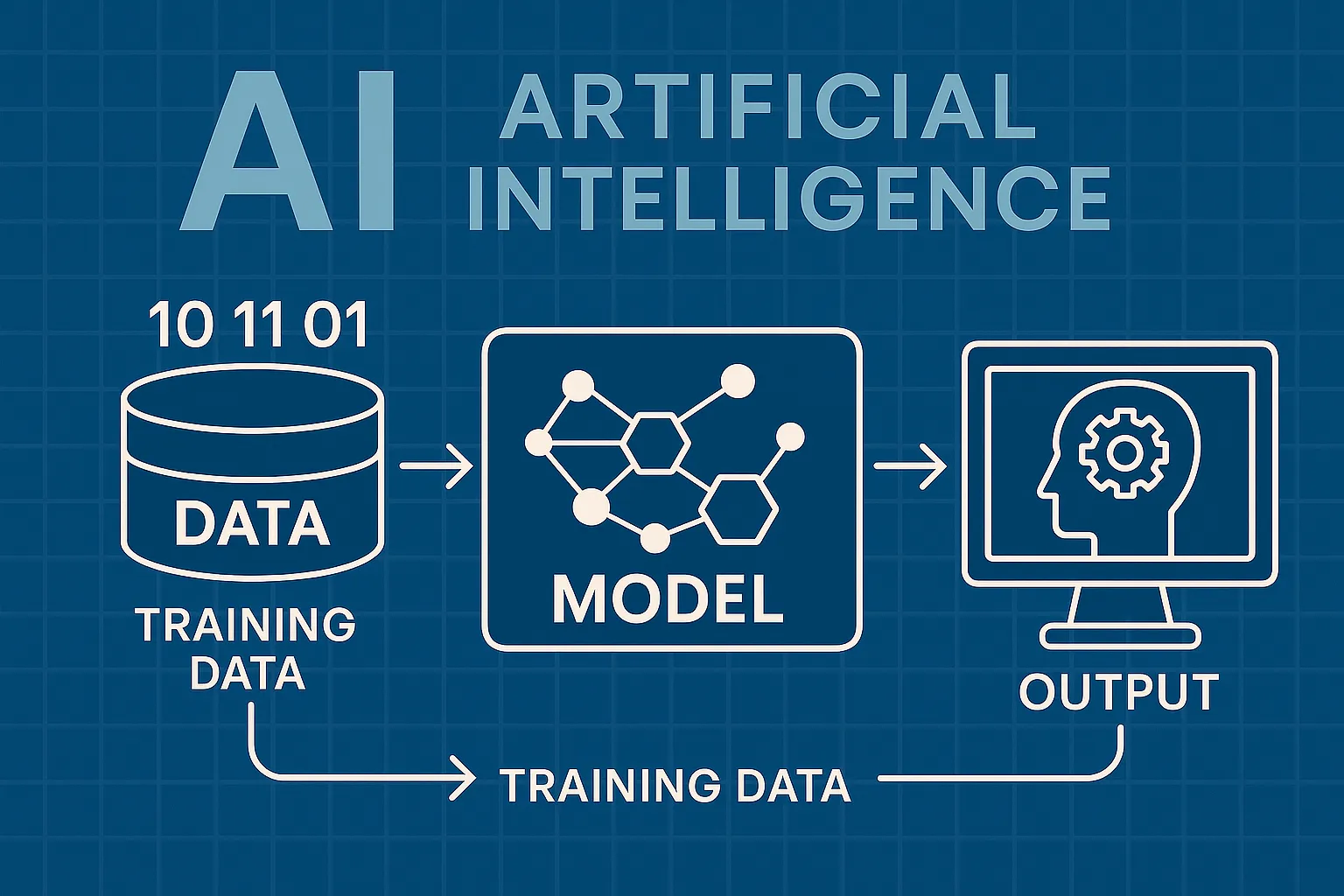
How AI Actually Works
Understand the basics of how AI systems learn, make decisions, and power tools like chatbots, image generators, and virtual assistants.

What Is Vibe Coding?
Discover the rise of vibe coding — an intuitive, aesthetic-first approach to building websites and digital experiences with help from AI tools.

7 Common Myths About AI
Think AI is conscious, infallible, or coming for every job? This post debunks the most widespread misconceptions about artificial intelligence today.

The Future of AI
From generative agents to real-world robotics, discover how AI might reshape society, creativity, and communication in the years ahead.

How AI Is Changing the Job Market
Will AI replace your job — or create new ones? Explore which careers are evolving, vanishing, or emerging in the AI-driven economy.

Common Issues with AI
Hallucinations, bias, privacy risks — learn about the most pressing problems in current AI systems and what causes them.