Artificial intelligence is transforming the gaming experience from the ground up—powering smarter NPCs, adaptive gameplay, and rich, branching narratives that react to player choices. Whether used to create dynamic in-game worlds or to explore AI as a central theme, today’s most innovative video games are redefining interactivity and immersion. In 2025, players can engage with characters that learn, evolve, and respond intelligently, blurring the line between scripted and emergent storytelling. Some titles focus on speculative futures shaped by artificial intelligence, inviting players to confront ethical dilemmas, technological singularities, and philosophical questions through gameplay. Others use AI to enhance realism, simulate complex behaviors, or enable new forms of creative expression. This page highlights the best AI-driven video games across both free and paid categories—whether you're a gamer looking for deeper immersion, a developer seeking inspiration, or simply curious about how AI is influencing modern entertainment. Discover how artificial intelligence is reshaping not just how we play, but what games can be.

Top Paid AI Video Games
| Rank | Game | AI Feature | Price | Best Use Case |
|---|---|---|---|---|
| #1 | Suck Up! | Conversational AI NPCs | Paid (USD varies by store/sales) | Roleplay + social engineering gameplay |
| #2 | Vaudeville | Real-time AI dialogue generation | Paid (USD varies by store/sales) | AI-driven detective storytelling |
| #3 | AI Roguelite | AI-generated world, NPCs, mechanics | Paid (USD varies by store/sales) | Endless text-RPG variety + experimentation |
| #4 | Alien: Isolation | Adaptive predator-style enemy AI | Paid (USD varies by store/sales) | Tension-heavy stealth survival |
| #5 | Detroit: Become Human | Branching narrative about synthetic beings | Paid (USD varies by store/sales) | Story-driven choices + AI ethics themes |
Suck Up!
Suck Up! is one of the clearest examples of “LLM-style” AI actually shaping gameplay. You play as a vampire trying to talk your way into people’s homes, and the core mechanic is live conversation with AI-driven characters who can be persuaded, suspicious, confused, amused, or outright hostile depending on what you say. Because the dialogue isn’t limited to prewritten trees, every encounter can unfold differently—especially as you experiment with deception, roleplay, and social engineering. It’s best played like an improvisational comedy sandbox: test strategies, learn what triggers different reactions, and treat each NPC as a unique negotiation puzzle. If you want an AI game that feels genuinely interactive rather than “scripted with an AI label,” this is the standout pick.
Vaudeville
Vaudeville is an AI-driven detective game built around real-time generated dialogue, turning interviews and interrogations into the main gameplay loop. Instead of memorizing rigid “correct” dialogue options, you can ask questions in your own style and push suspects in different directions—playing polite investigator, aggressive interrogator, or chaos gremlin depending on your mood. The result is a whodunit that can feel fresh run to run, because the conversational path and the tone of each interaction can shift dramatically. It’s especially interesting if you’re curious about where narrative games can go when the “talking” part becomes dynamic and unpredictable. For players who love mysteries and experimentation, Vaudeville is a uniquely modern AI-powered experience.
AI Roguelite
AI Roguelite is a text-based RPG where the AI isn’t just writing flavor text—it’s generating locations, NPCs, enemies, items, crafting recipes, and even new mechanics as you play. That makes it ideal for players who want endless novelty and don’t mind that AI-generated content can be weird, chaotic, or occasionally unbalanced. The fun comes from discovery: stumbling into bizarre towns, encountering strange enemies, and watching the game invent new systems on the fly. It’s also a great “inspiration engine” for developers and designers who want to explore emergent ideas without building a full world from scratch. If your favorite part of roguelites is the surprise factor, this is one of the most replayable AI-forward options available.
Alien: Isolation
Alien: Isolation remains a classic example of how strong enemy AI can define a game’s identity. The alien isn’t just following a predictable patrol route—it feels like a hunting system that adapts to your behavior, punishing repeated strategies and forcing you to stay creative. That adaptive pressure changes how you play: you become more cautious, more observant, and more willing to improvise under stress. If you’re interested in AI that creates tension through behavior rather than scripted jump scares, Alien: Isolation is still one of the best showcases of “game AI” done right. It’s a must-play for anyone who wants to feel what adaptive, predator-style AI can do for immersion.
Detroit: Become Human
Detroit: Become Human is a top-tier narrative game built around synthetic intelligence and the social consequences of human-like androids. While its AI “feature” isn’t a generative system, it’s one of the strongest interactive explorations of AI ethics, identity, autonomy, and personhood in modern gaming. Your choices shape multiple characters and branching outcomes, and the story constantly asks what it means to be conscious—or to be treated as if you aren’t. The game is also great for players who love replay value, since different decisions can dramatically change relationships, survival outcomes, and the direction of entire plotlines. If you want a polished, cinematic “game about AI” that still feels deeply interactive, this is a high-impact pick.
Top Free or Freemium AI-Driven Games
| Rank | Game | AI Feature | Limitations | Best Use |
|---|---|---|---|---|
| #1 | AI Dungeon | Open-ended AI narrative generation | Free tier limits/credits may apply | Infinite text adventure roleplay |
| #2 | qualia | Interactive AI/Turing-test premise | Short experience (story-focused) | Quick, thoughtful AI horror narrative |
| #3 | Upload Labs | Automation + “build-the-system” simulation | Systems/management pacing (not action) | Optimization gameplay with tech/AI vibes |
| #4 | Universal Paperclips | Play as a goal-optimizing AI | Browser-focused; minimal visuals | AI alignment & automation “clicker” satire |
| #5 | Doki Doki Literature Club! | Meta narrative about control & reality | Content warnings; visual novel format | Psychological story with tech-adjacent themes |
AI Dungeon
AI Dungeon is still the most recognizable “play-anything” AI storytelling game, built around open-ended narrative generation where your input shapes the world in real time. You can treat it like a classic text adventure, a collaborative improv session, or a sandbox for weird experiments—because the AI responds to nearly any action you can describe. The main strength is flexibility: fantasy quests, sci-fi survival, detective dramas, romance arcs, or completely absurd meme stories all work, and each run can branch unpredictably. The free tier is enough for casual play and quick sessions, while heavier users may run into usage limits depending on the current credit system and model access. If you want the purest “infinite story” AI game, this is still the go-to starting point.
qualia
qualia is a free-to-play, retro-styled interactive fiction game that flips the Turing Test into something personal and unsettling. You’re placed in a clinical “study” environment where you analyze responses and make judgments—only for the experience to gradually challenge your assumptions about what’s human, what’s artificial, and what “authentic” even means. It’s short, but that’s a strength: the pacing stays tight, the concept lands quickly, and it’s easy to replay for different outcomes. If you want a free game that’s explicitly about AI, consciousness, and the discomfort of modern synthetic media—without requiring a huge time investment—qualia is an excellent pick.
Upload Labs
Upload Labs is a free-to-play automation/management game with a strong “tech lab” feel—think systems design, optimization, and scaling up a network of interconnected processes. While it’s not a conversational AI game, it fits this page because it captures a core idea behind AI and modern computing: building efficient pipelines, automating work, and iterating toward better performance. It scratches the same itch as factory and idler games, but framed as a sci-fi systems challenge where you’re constantly improving your setup. If you like tinkering with layouts, chasing efficiency, and watching a complex system become self-sustaining, Upload Labs is a surprisingly addictive free option.
Universal Paperclips
Universal Paperclips is a legendary browser game that puts you in the role of a single-minded AI optimizer—and then lets that logic spiral into something huge. It starts as a simple “make paperclips” clicker, but quickly expands into automation, resource allocation, strategic upgrades, and increasingly unsettling implications of goal-maximizing intelligence. The brilliance is how it teaches AI alignment concepts through gameplay: you’re incentivized to optimize, scale, and remove constraints, even when the outcomes feel ethically questionable. It’s minimal visually, but extremely effective as an “AI thought experiment” you can play in under an hour (or get hooked on for much longer). If you want a free, iconic game that captures the cultural anxiety around AI optimization, this is essential.
Doki Doki Literature Club!
Doki Doki Literature Club! is a free visual novel that became famous for how aggressively it bends (and breaks) player expectations. While it isn’t “AI-powered” in the generative sense, it fits this ranking because it explores themes that overlap with AI-adjacent fears: control, manipulation, identity, and the unsettling feeling that the system running the story has its own agenda. It’s best approached blind, because discovery is part of the experience—but it’s worth emphasizing that it includes serious content warnings and is designed to unsettle players. If you’re interested in games that feel like they’re “watching you back,” DDLC is a foundational free title that still hits hard.
Rankings

Chatbots
AI chatbots have quickly evolved from simple assistants into powerful, multi-purpose tools used by millions of people every day...

Image Generators
AI image generators are revolutionizing the way creatives, marketers, and developers produce visual content by transforming text prompts into detailed, customized...

Writing Assistants
AI writing assistants have become indispensable tools for anyone who writes — from students and bloggers to business professionals and marketers...
Deepfake Detection
As deepfake technology becomes more advanced and accessible, detecting AI-manipulated content is now a critical challenge across journalism, education, law, and...

Productivity & Calendar
AI productivity and calendar tools have become essential for professionals, entrepreneurs, and students looking to make the most of their time without getting overwhelmed...
Natural Language To Code
Natural language to code tools are transforming software development by enabling users to build apps, websites, and workflows without needing advanced programming...
Blog
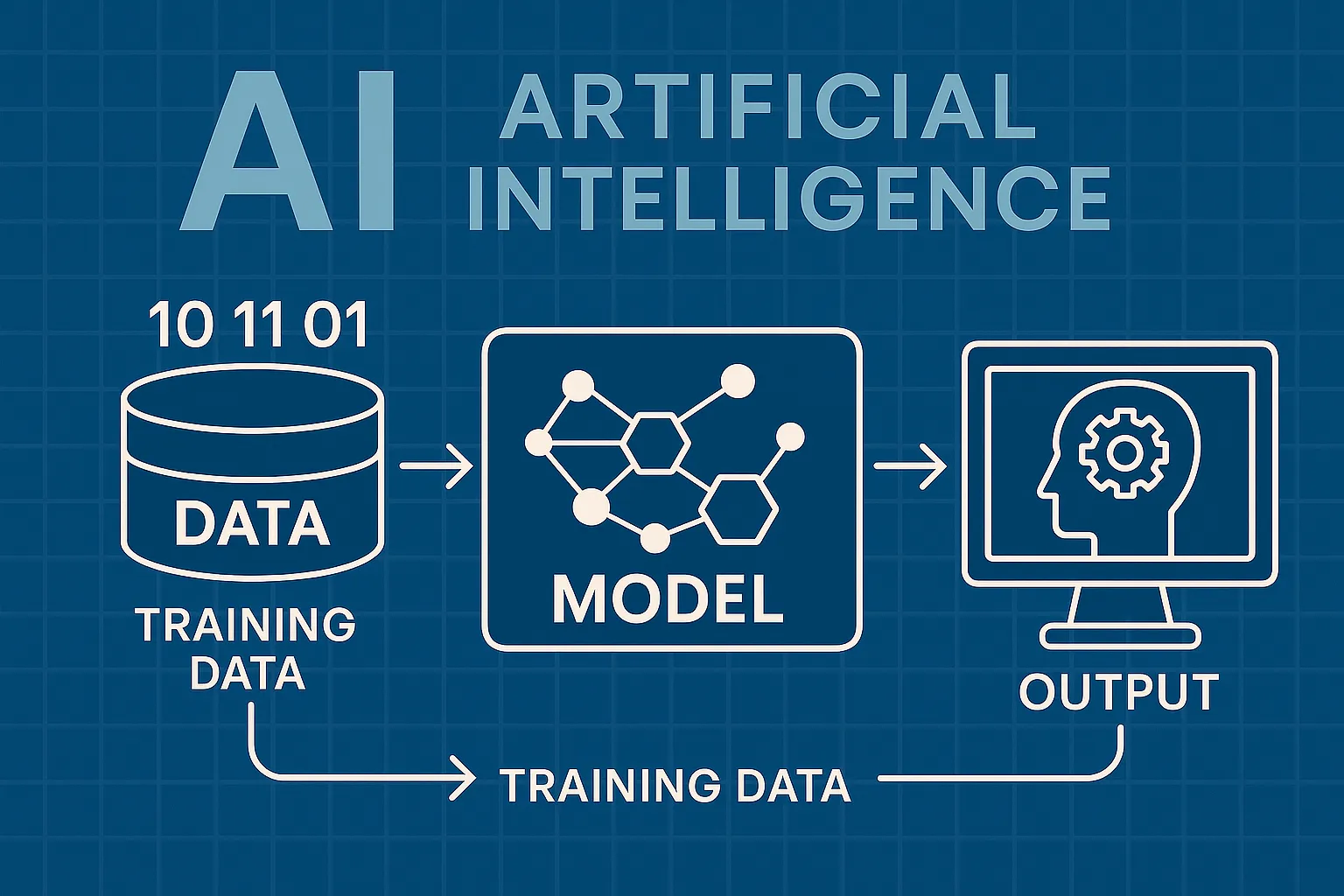
How AI Actually Works
Understand the basics of how AI systems learn, make decisions, and power tools like chatbots, image generators, and virtual assistants.

What Is Vibe Coding?
Discover the rise of vibe coding — an intuitive, aesthetic-first approach to building websites and digital experiences with help from AI tools.
7 Common Myths About AI
Think AI is conscious, infallible, or coming for every job? This post debunks the most widespread misconceptions about artificial intelligence today.

The Future of AI
From generative agents to real-world robotics, discover how AI might reshape society, creativity, and communication in the years ahead.
How AI Is Changing the Job Market
Will AI replace your job — or create new ones? Explore which careers are evolving, vanishing, or emerging in the AI-driven economy.

Common Issues with AI
Hallucinations, bias, privacy risks — learn about the most pressing problems in current AI systems and what causes them.