As AI-generated videos become more realistic and widely accessible, the need for reliable detection tools has never been greater. From fabricated news footage to synthetic marketing content and staged viral clips, manipulated videos pose serious risks to public trust, media integrity, and online safety. Fortunately, AI is also being used to fight back—offering advanced detection systems that can analyze visual anomalies, metadata, and compositional flaws that signal tampering. These tools are critical not just for content moderators and digital forensics teams, but also for journalists, educators, and everyday users who want to verify the authenticity of what they see online. Whether the goal is to detect subtle CGI artifacts or validate video provenance in real time, this guide highlights top-performing free and paid AI tools designed to expose synthetic or altered footage. Explore the most effective solutions available in 2025 for protecting against misinformation and maintaining visual truth in an increasingly digital world.

Best Paid AI Video Detection Tools
| Rank | Tool | Focus | Price | Use Case |
|---|---|---|---|---|
| #1 | Hive AI Video Detection | AI-generated & deepfake video detection | Custom (USD) | Platform moderation & large-scale scanning |
| #2 | Reality Defender | Real-time deepfake detection + forensic review | Custom (USD) | Enterprise security, media verification, risk scoring |
| #3 | Sensity AI | Forensic-grade detection for video (plus other media) | Enterprise pricing (USD) | Investigations, brand protection, threat monitoring |
| #4 | Truepic Vision | Capture authenticity & provenance (C2PA-aligned workflows) | Enterprise SDK (USD) | Proof-of-origin for mobile footage and compliance |
| #5 | Attestiv Deepfake Video Detection | Deepfake + editing/tamper detection for video links or files | Custom / tiered (USD) | Fraud prevention, claims review, newsroom verification |
Hive AI Video Detection
Hive AI is a top-tier choice for organizations that need dependable, scalable detection of AI-generated and manipulated videos. Built for high-volume environments, Hive’s models analyze video content for deepfake indicators such as generation artifacts, inconsistent facial geometry, unnatural frame-to-frame transitions, and other synthetic patterns that are difficult to spot manually. The platform is commonly used in trust and safety workflows because it integrates cleanly via API, supports automated moderation pipelines, and returns clear probability scores for fast decision-making. Teams can run real-time checks or batch scans, then route flagged clips to human reviewers when stakes are high. If you manage user-generated content, monitor political misinformation risk, or need a reliable “first pass” filter before publishing, Hive is one of the most practical paid solutions in 2026.
Reality Defender
Reality Defender focuses on protecting organizations from modern synthetic media threats by detecting deepfakes in real time and at scale. It’s especially strong for security and high-trust environments because it’s designed around actionable outputs: risk scoring, confidence levels, and review-friendly results that help teams decide what to block, escalate, or approve. Reality Defender supports video analysis (alongside other media types), making it useful for enterprise communications, media organizations, customer verification flows, and brand protection teams dealing with impersonation campaigns. Many detection tools fail when content is heavily compressed or reposted multiple times, so Reality Defender’s practical strength is its “defensive reliability” for real-world content. If you need a professional platform rather than a consumer checker, Reality Defender is a strong paid pick for 2026.
Sensity AI
Sensity AI offers forensic-grade deepfake detection with a strong emphasis on investigative workflows. For video verification, it looks for manipulation fingerprints such as face swaps, lip-sync inconsistencies, altered facial regions, and other synthetic anomalies that frequently show up across modern deepfake methods. Sensity is commonly used for brand safety, government and legal contexts, and media monitoring because it supports structured reporting and can scale beyond one-off checks. Teams can analyze suspicious clips quickly, triage results, and generate evidence-friendly outputs when they need to justify why content was flagged. If you’re dealing with targeted harassment, impersonation incidents, or reputational attacks, Sensity provides a more professional “detection + investigation” experience than lightweight consumer tools.
Truepic Vision
Truepic Vision approaches the problem from the opposite direction: instead of only detecting fakes after they spread, it helps prove authenticity at the moment of capture. Through secure camera and provenance workflows, Truepic can bind footage to tamper-evident data so organizations can verify “where, when, and how” a video was recorded. This is particularly valuable in journalism, insurance claims, compliance environments, inspections, and any setting where chain-of-custody matters. While deepfake detectors are essential, provenance tools reduce the risk of ambiguity by making trustworthy capture the default. In a world where AI video generation is accelerating, capture authentication is becoming a major layer of defense—and Truepic is one of the best-known vendors in that space.
Attestiv Deepfake Video Detection
Attestiv is built for practical, real-world verification: scanning video files or links to identify deepfakes, edits, and other signs of tampering that can indicate fraud or misinformation. This makes it a strong fit for organizations that handle large volumes of user-submitted media—like insurance teams reviewing claims footage, cybersecurity groups assessing impersonation attempts, and newsrooms validating viral clips before publication. Attestiv’s approach is useful because not every “fake” is a face swap; sometimes the risk is subtle editing, misleading recompression, or manipulated context. By combining automated analysis with investigation-friendly results, Attestiv helps teams reduce manual review time while still escalating higher-risk clips for deeper scrutiny. If you want enterprise-grade verification that fits operational workflows, Attestiv is a strong paid option in 2026.
Best Free AI Video Detection Tools
| Rank | Tool | Focus | Limitations | Notes |
|---|---|---|---|---|
| #1 | Deepware Scanner | Deepfake face-manipulation detection | Best for shorter clips; web tool constraints | Fast “first check” with upload or link |
| #2 | DeepFake-o-meter | Academic multi-model deepfake scoring | Research-grade UI; limited support | Great for learning + comparing detectors |
| #3 | InVID Verification Plugin | Keyframes, metadata, reverse search & context checks | Manual verification (not AI classification) | Essential for journalists and fact-checkers |
| #4 | Hive AI Detection Demo | AI-generated / deepfake probability scoring | Demo usage limits; not for heavy workflows | Quick checks without building an integration |
| #5 | Content Credentials (Verify) | Provenance & authenticity signals (C2PA credentials) | Only works when credentials are present | Best for checking “proof-of-origin” metadata |
Deepware Scanner
Deepware Scanner is one of the most accessible free tools for checking suspicious videos for deepfake-style face manipulation. You can upload a clip or provide a link, and the scanner returns a confidence-style result that helps you decide whether deeper investigation is necessary. Deepware’s strength is speed and simplicity: it’s designed for quick screening rather than forensic reporting, making it useful for educators, journalists, and everyday users who want a fast “is this worth worrying about?” answer. Like most free scanners, results can vary depending on compression quality, lighting, and how aggressively the video was edited or reposted. Still, as an early warning system, Deepware is a strong first step before you escalate to professional tools or manual verification workflows.
DeepFake-o-meter
DeepFake-o-meter is an open-access research platform from the University at Buffalo that’s especially valuable for transparency and education. Instead of relying on a single detector, it allows users to run multiple academic models and compare how each one scores a piece of media. This is extremely useful in real-world deepfake verification because different detectors can succeed or fail depending on the generation method, compression, face visibility, and motion. The interface is more “research tool” than consumer product, but it’s one of the best free resources for learning how deepfake detection works and for testing content with multiple perspectives. If you’re teaching media literacy, evaluating deepfake risk, or exploring detection behavior as a developer, DeepFake-o-meter is a standout free option.
InVID Verification Plugin
InVID is a must-have free toolkit for video verification, even though it’s not an AI deepfake classifier. It helps you validate authenticity through investigative techniques: extracting keyframes, running reverse-image searches, analyzing metadata, and checking how a video may have been reposted or reframed across platforms. This is crucial because many “fake” videos aren’t purely AI-generated—they’re misleading through context, edits, captions, or selective cropping. InVID helps you gather supporting evidence and build a clearer picture of provenance and manipulation risk. For journalists, researchers, educators, and anyone doing serious fact-checking, InVID is one of the most effective free tools you can add to your workflow.
Hive AI Detection Demo
Hive’s detection demo is a practical way to run quick checks on video content without needing an API integration. It’s useful when you want an instant probability score for whether a clip appears AI-generated or manipulated, especially as a second opinion after you’ve used other free tools. Because it’s a demo environment, it’s not meant for large workloads or continuous monitoring—but it can be very helpful for one-off verification, classroom demonstrations, or quick sanity checks on suspicious clips circulating online. If you like the results and need scale, Hive’s enterprise offering is one of the more established upgrade paths for platforms and moderation teams.
Content Credentials (Verify)
Content Credentials (Verify) is a free tool designed to inspect embedded authenticity metadata—often referred to as content provenance or “proof-of-origin” signals. Instead of guessing whether a video is fake based on pixels alone, it checks whether the file includes Content Credentials (C2PA) that can document creation tools, edits, and publishing history. This is most useful when credentials are present, which won’t always be the case—many platforms strip metadata, and many videos never had credentials attached in the first place. Still, when it works, it provides a stronger form of verification than traditional detection because it focuses on provenance rather than pattern matching. Use it alongside AI detectors and manual verification for the most reliable overall workflow.
Rankings

Chatbots
AI chatbots have quickly evolved from simple assistants into powerful, multi-purpose tools used by millions of people every day...

Image Generators
AI image generators are revolutionizing the way creatives, marketers, and developers produce visual content by transforming text prompts into detailed, customized...

Writing Assistants
AI writing assistants have become indispensable tools for anyone who writes — from students and bloggers to business professionals and marketers...
Deepfake Detection
As deepfake technology becomes more advanced and accessible, detecting AI-manipulated content is now a critical challenge across journalism, education, law, and...
Productivity & Calendar
AI productivity and calendar tools have become essential for professionals, entrepreneurs, and students looking to make the most of their time without getting overwhelmed...
Natural Language To Code
Natural language to code tools are transforming software development by enabling users to build apps, websites, and workflows without needing advanced programming...
Blog
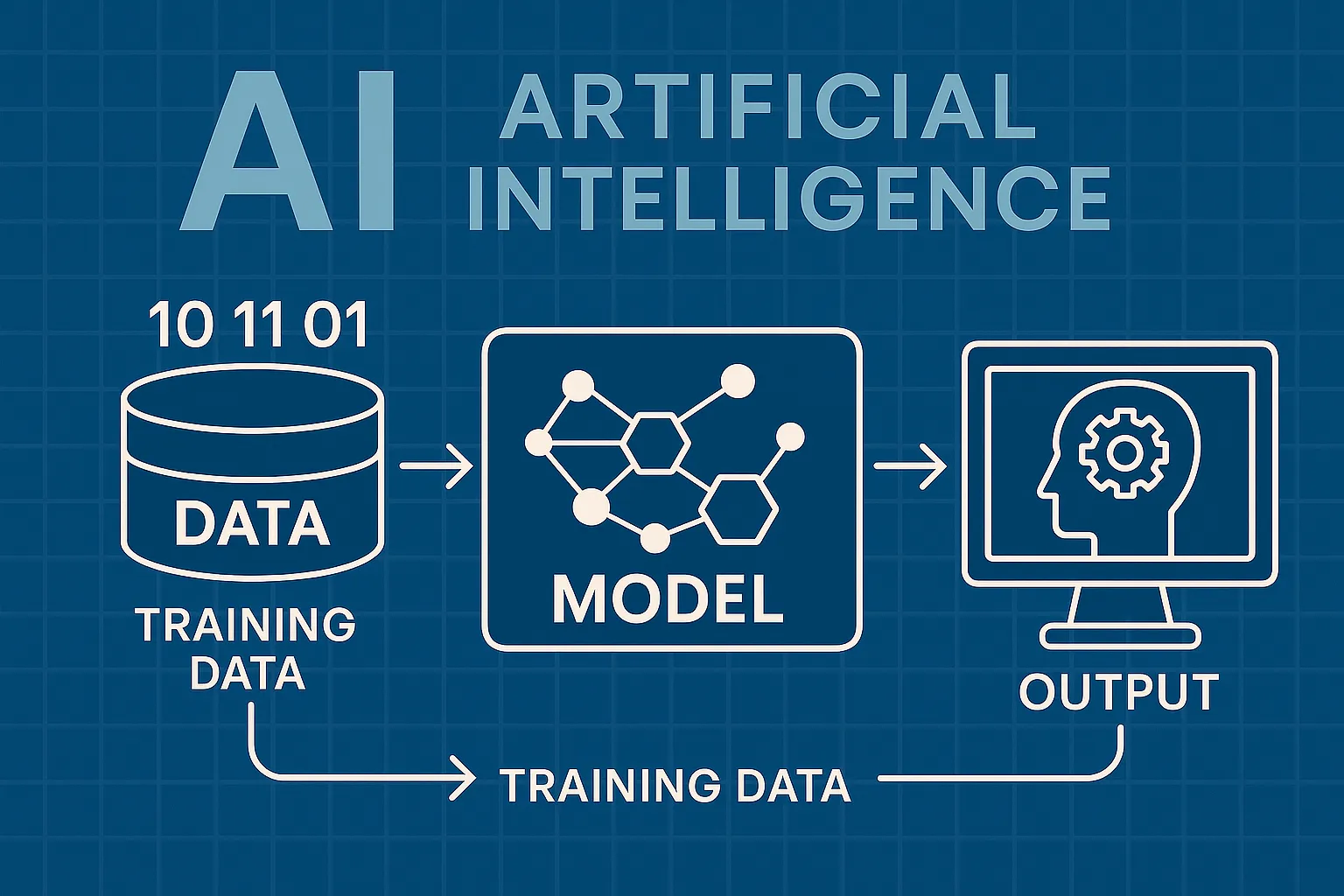
How AI Actually Works
Understand the basics of how AI systems learn, make decisions, and power tools like chatbots, image generators, and virtual assistants.

What Is Vibe Coding?
Discover the rise of vibe coding — an intuitive, aesthetic-first approach to building websites and digital experiences with help from AI tools.
7 Common Myths About AI
Think AI is conscious, infallible, or coming for every job? This post debunks the most widespread misconceptions about artificial intelligence today.

The Future of AI
From generative agents to real-world robotics, discover how AI might reshape society, creativity, and communication in the years ahead.
How AI Is Changing the Job Market
Will AI replace your job — or create new ones? Explore which careers are evolving, vanishing, or emerging in the AI-driven economy.

Common Issues with AI
Hallucinations, bias, privacy risks — learn about the most pressing problems in current AI systems and what causes them.