Engineers across disciplines are increasingly turning to AI to accelerate design, optimize performance, and solve complex problems more efficiently. This page features the best AI tools for engineers in 2025, showcasing both free and paid platforms that assist with simulation, predictive analytics, design automation, code generation, and data-driven decision-making. Whether you're a mechanical engineer running stress tests, a civil engineer modeling infrastructure, or a software engineer streamlining development, these tools help automate tedious tasks while improving precision and speed. Many platforms integrate with industry-standard tools like MATLAB, AutoCAD, SolidWorks, and Python environments to fit naturally into your existing workflow. We've evaluated each solution based on engineering relevance, usability, feature depth, and scalability. If you're looking to enhance your engineering process with intelligent automation, this guide covers the most effective AI-powered tools designed to help technical teams innovate faster and work smarter.
Top Paid AI Tools for Engineers
| Rank | Tool | Key Strength | Price / Limitations | Best Use Case |
|---|---|---|---|---|
| #1 | Autodesk Fusion + Generative Design | AI-assisted generative design + integrated CAD/CAM/CAE | Subscription pricing (varies by term/region); advanced workflows may require extensions | Mechanical/product design from concept to manufacturing |
| #2 | Ansys Engineering Copilot | In-product AI guidance for simulation setup, troubleshooting, and workflows | License-based (Ansys products/editions); availability depends on product/version | Accelerating CAE workflows in mechanical, fluids, EM, and multiphysics |
| #3 | Altair HyperWorks + Altair Copilot | AI-powered CAE optimization with an engineering-focused assistant | Enterprise licensing (Altair Units); best value for teams using multiple solvers | Design exploration, optimization, and simulation-driven engineering |
| #4 | Siemens NX X + Designcenter NX Copilot | AI copilot for NX guidance + high-end CAD/CAE/CAM workflows | Annual subscription / value-based licensing; cost varies by modules and seats | Enterprise-grade CAD/CAM with AI-assisted guidance and complex assemblies |
| #5 | Augury Machine Health | AI-driven predictive maintenance using vibration/acoustic diagnostics | Enterprise pricing; requires sensor deployment and onboarding effort | Monitoring rotating equipment and preventing unplanned downtime |
Autodesk Fusion + Generative Design
Autodesk Fusion is a modern, cloud-connected CAD/CAM/CAE platform that’s become a go-to choice for engineers who want design, simulation, and manufacturing tools in one workflow. Its AI-assisted generative design features help explore part geometries by targeting performance goals (like stiffness-to-weight), defining constraints (mounting points, keep-out zones), and selecting candidate materials—then producing multiple design options you can refine into production-ready models. Because simulation and manufacturing are tightly integrated, teams can iterate faster: validate stress/deflection trends, adjust geometry, and move directly into toolpaths and fabrication planning without constantly exporting between separate apps. Fusion also supports collaborative design review, versioning, and cross-team handoffs, which is especially useful when engineering decisions need to be documented and revisited. For engineers who want practical AI assistance inside an end-to-end product development pipeline, Fusion remains one of the most complete paid options available.
Ansys Engineering Copilot
Ansys Engineering Copilot is designed for engineers who live inside simulation tools and want faster answers while building, solving, and validating models. Instead of hunting through documentation, forums, and internal notes, Copilot provides AI-guided help directly in supported Ansys environments—reducing friction during common pain points like setup steps, boundary condition choices, meshing workflows, solver configuration, and troubleshooting odd errors. This matters most on complex projects where iteration speed is everything: fewer false starts, faster convergence on correct settings, and clearer “why” behind recommended workflows. For teams running advanced CAE across structures, fluids, electronics, optics, or coupled multiphysics, Copilot pairs well with established Ansys toolchains by making expert knowledge easier to access and apply consistently. If your engineering organization values repeatable simulation practices and wants to reduce time lost to configuration and rework, Ansys Engineering Copilot is one of the most relevant AI upgrades in the CAE space.
Altair HyperWorks + Altair Copilot
Altair HyperWorks is a well-known engineering simulation and optimization ecosystem, and recent releases emphasize AI-powered engineering to speed up design exploration and decision-making. For engineering teams, the biggest advantage is how HyperWorks brings multiple capabilities together—pre/post processing, optimization workflows, solver integration, and high-performance computing—while using AI to help reduce iteration time. Altair Copilot adds an assistant layer on top of this environment, helping users navigate features, find the right workflows, and solve problems faster when the toolchain gets complex. This combination is particularly strong for engineers working on multi-physics programs, large assemblies, or optimization-heavy development cycles (lightweighting, performance constraints, durability targets, etc.). If you’re in an organization that uses several simulation tools across different teams, Altair’s flexible licensing approach can also reduce the friction of “who has which license,” making HyperWorks a scalable choice for serious CAE groups that want AI support without sacrificing depth.
Siemens NX X + Designcenter NX Copilot
Siemens NX is a flagship platform for high-end engineering design and manufacturing, and NX X expands this into a cloud-enabled subscription model that fits modern enterprise deployment. What makes it especially relevant in 2026 is the emergence of an NX Copilot experience focused on helping engineers get better outcomes faster—by guiding users through NX features, add-on modules, and best-practice workflows using natural language. In practice, this can reduce the learning curve for complex capabilities and speed up day-to-day tasks when teams are balancing tight schedules with complicated design constraints. NX remains a strong choice for organizations working on sophisticated assemblies, advanced surfacing, integrated CAD/CAM pipelines, and tightly controlled product data workflows. If your team is already standardized on Siemens tooling (or needs enterprise-grade CAD/CAM with a clear upgrade path), NX X with copilot-style guidance is a compelling “AI + engineering platform” combination rather than just another general AI chatbot.
Augury Machine Health
Augury focuses on one of the most valuable engineering applications of AI: preventing failures before they happen. By combining sensor data (often vibration and acoustics) with AI-driven diagnostics and reliability expertise, Augury helps maintenance and reliability teams detect early warning signs of issues like bearing wear, misalignment, imbalance, lubrication problems, and other failure modes that cause costly downtime. The practical engineering value is not just “alerts,” but clearer prioritization—what matters now, what can wait, and how to plan maintenance windows with better confidence. Augury is most impactful in manufacturing plants, process facilities, and anywhere rotating machinery is critical to throughput and safety. While it’s an enterprise platform that typically involves deployment and onboarding effort, the upside is significant: better asset reliability, fewer emergency shutdowns, and improved maintenance planning. For engineers working in operations, reliability, or Industry 4.0 environments, it’s one of the strongest AI tools in the predictive maintenance category.
Top Free AI Tools for Engineers
| Rank | Tool | Key Strength | Limitations | Best Use |
|---|---|---|---|---|
| #1 | ChatGPT (Free) | Engineering Q&A, explanations, drafting, and quick coding help | Usage caps and fewer advanced features than paid tiers | Fast problem breakdowns, calculation setup, and documentation drafts |
| #2 | GitHub Copilot (Free) | AI code completion and suggestions in popular IDEs | Limited access to select features/usage compared to paid Copilot tiers | Speeding up engineering scripts, automation, and tooling development |
| #3 | SimScale Community Plan | Free cloud-based CFD/FEA learning and prototyping | Community plan constraints (project/output limits); commercial work requires paid plan | Browser-based simulation practice and early design validation |
| #4 | Google Colab | Free cloud Python notebooks (great for data + engineering scripts) | Session timeouts and variable compute availability on free tier | Rapid prototyping for analytics, ML experiments, and simulation post-processing |
| #5 | Wolfram|Alpha (Basic) | Symbolic math, unit handling, and engineering-friendly computations | Basic tier often lacks step-by-step solutions and extended compute features | Checking calculations, units, curves, and quick engineering math |
ChatGPT (Free)
ChatGPT is one of the most broadly useful free AI tools for engineers because it adapts to whatever discipline you’re working in—mechanical, civil, electrical, chemical, software, or systems. Engineers use it to sanity-check assumptions, translate a messy problem statement into a clean solution plan, and generate clearer documentation (requirements, test checklists, design reviews, maintenance procedures, SOPs, and report sections). It’s also handy for quick coding assistance: writing Python scripts for data cleanup, generating MATLAB-style pseudocode, debugging logic, or producing lightweight tooling that supports a larger engineering workflow. The free tier is best treated as a “fast engineering assistant” for day-to-day tasks, with the understanding that usage caps and fewer advanced features can limit deep, long-session work. When you combine it with good prompting—explicit units, known constraints, and the exact outputs you need—it becomes a strong productivity booster for both students and working engineers.
GitHub Copilot (Free)
GitHub Copilot is especially valuable for engineers who build tools, automation, or analysis scripts—even if “software engineer” isn’t your title. The free plan gives individual developers a no-cost way to try AI-powered coding assistance that helps write boilerplate faster, suggests functions as you type, and accelerates routine work like parsing sensor logs, building small dashboards, automating Excel/CSV pipelines, or creating quick simulation post-processing scripts. In engineering contexts, Copilot shines when you’re under time pressure: you can scaffold a working solution quickly and then refine it for correctness, performance, and edge cases. The free tier is intentionally limited compared to paid Copilot plans, but it’s still extremely useful for students, early-career engineers, and anyone who wants to move faster on code-heavy tasks without committing to a subscription.
SimScale Community Plan
SimScale’s Community Plan is one of the best free ways for engineers to experiment with CFD and FEA in a real engineering environment without buying expensive software or hardware. Because it runs in the browser, you can set up and run simulations from almost any machine, which makes it ideal for learning, prototyping, and early-stage design validation. Engineers can explore structural and thermal behavior, test airflow concepts, or validate boundary-condition choices before committing to a full paid workflow. The key tradeoff is that the free plan comes with constraints—such as limits around projects and outputs—and it’s not intended for commercial/private production work. Still, for students, hobbyists, and engineers trying to validate ideas quickly, SimScale’s free tier is a powerful on-ramp into simulation-driven decision-making.
Google Colab
Google Colab remains a favorite free tool for engineers who want a lightweight, shareable Python environment for analysis and prototyping. It’s particularly useful when you’re working with large datasets (sensor logs, lab measurements, test data), or when you want to build quick models and visualizations without setting up a local environment. With common scientific libraries (NumPy, SciPy, pandas, matplotlib) and optional access to accelerators depending on availability, Colab is great for tasks like curve fitting, regression modeling, anomaly detection experiments, and simulation post-processing pipelines. Colab notebooks are also easy to share with teammates, which supports reproducibility and faster iteration during projects. The main limitations are free-tier compute constraints and session timeouts, but for many engineering workflows—especially exploratory analysis—it’s more than enough to get real work done quickly.
Wolfram|Alpha (Basic)
Wolfram|Alpha is a classic “engineering math assistant” that still earns its place in a modern AI toolkit. The Basic tier is excellent for quick computations and validations: unit conversions, symbolic math checks, solving equations, generating quick plots, and verifying intermediate steps in longer calculations. Engineers often use it as a reliability layer—especially when working across mixed units, complex algebra, or when they want a second opinion on a derived result before putting it into a report or spreadsheet model. While the Basic version typically doesn’t include the full step-by-step experience or extended compute tools that paid tiers offer, it’s still a strong free option for everyday engineering math and sanity checks. Used alongside an LLM (for explanation and setup) it can create a fast, accurate “setup + compute + verify” workflow.
Rankings

Chatbots
AI chatbots have quickly evolved from simple assistants into powerful, multi-purpose tools used by millions of people every day...

Image Generators
AI image generators are revolutionizing the way creatives, marketers, and developers produce visual content by transforming text prompts into detailed, customized...
Writing Assistants
AI writing assistants have become indispensable tools for anyone who writes — from students and bloggers to business professionals and marketers...

Deepfake Detection
As deepfake technology becomes more advanced and accessible, detecting AI-manipulated content is now a critical challenge across journalism, education, law, and...
Productivity & Calendar
AI productivity and calendar tools have become essential for professionals, entrepreneurs, and students looking to make the most of their time without getting overwhelmed...
Natural Language To Code
Natural language to code tools are transforming software development by enabling users to build apps, websites, and workflows without needing advanced programming...
Blog
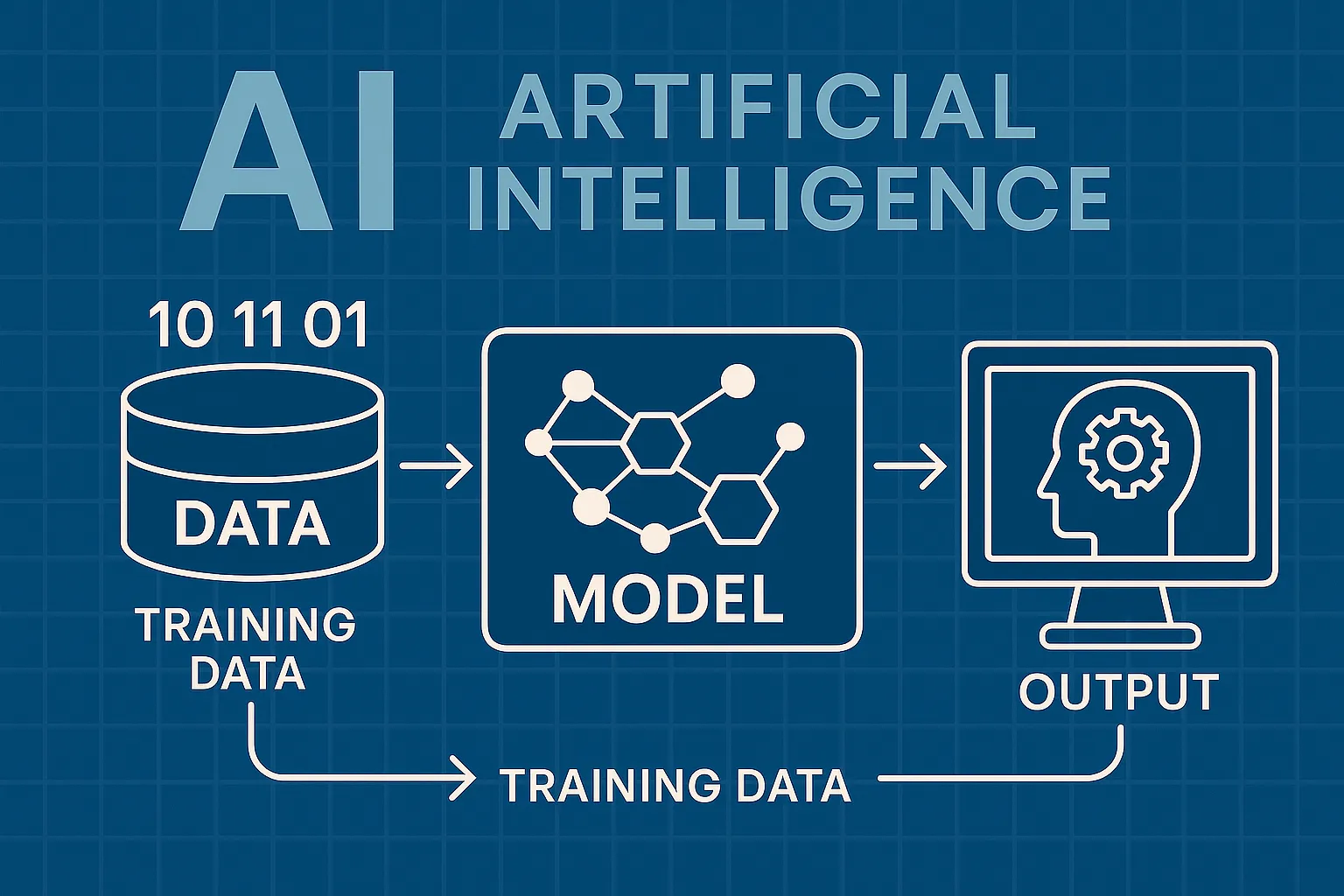
How AI Actually Works
Understand the basics of how AI systems learn, make decisions, and power tools like chatbots, image generators, and virtual assistants.

What Is Vibe Coding?
Discover the rise of vibe coding — an intuitive, aesthetic-first approach to building websites and digital experiences with help from AI tools.
7 Common Myths About AI
Think AI is conscious, infallible, or coming for every job? This post debunks the most widespread misconceptions about artificial intelligence today.

The Future of AI
From generative agents to real-world robotics, discover how AI might reshape society, creativity, and communication in the years ahead.
How AI Is Changing the Job Market
Will AI replace your job — or create new ones? Explore which careers are evolving, vanishing, or emerging in the AI-driven economy.

Common Issues with AI
Hallucinations, bias, privacy risks — learn about the most pressing problems in current AI systems and what causes them.