Data scientists work at the intersection of complex data and practical solutions—and in 2026, AI tools are central to accelerating every stage of that process. This page features the best AI tools for data scientists, comparing both free and paid platforms that support notebook-based experimentation, data preprocessing, feature engineering, visualization, deployment, and MLOps. Whether you're building classical ML models, fine-tuning foundation models, or shipping real-time data applications, the right tooling can automate repetitive work and help you iterate faster without sacrificing rigor. Many modern platforms now include AutoML, experiment tracking, model registries, governance controls, and tight integrations with Python, Jupyter, and major cloud ecosystems. We evaluated each option based on scalability, workflow fit, team collaboration, reliability, and relevance to real-world data science. If you're looking to streamline experimentation, productionize models, or reduce the friction between analysis and deployment, these AI-powered platforms can help you deliver results faster—while keeping your workflows more reproducible and easier to maintain.
Top Paid AI Tools for Data Scientists
| Rank | Tool | Key Strength | Price / Limitations | Best Use Case |
|---|---|---|---|---|
| #1 | Databricks | Lakehouse + ML + GenAI in one | Usage-based / enterprise plans | End-to-end pipelines at scale |
| #2 | Amazon SageMaker | Managed training, deployment, MLOps | Pay-as-you-go AWS costs | Production ML on AWS |
| #3 | Google Vertex AI | Unified ML + GenAI platform | Consumption-based pricing | ML + LLM apps on Google Cloud |
| #4 | Dataiku | Team collaboration + governed workflows | Custom/enterprise plans | Cross-functional analytics teams |
| #5 | Snowflake Cortex AI | LLM + ML inside governed data cloud | Snowflake credits / usage costs | AI on enterprise data in Snowflake |
Databricks
Databricks remains one of the strongest “all-in-one” choices for modern data science teams because it combines large-scale data processing, collaborative notebooks, and production-grade ML tooling in a single lakehouse platform. It’s especially compelling for organizations that need to move seamlessly from ingestion and transformation (Spark + Delta) to experimentation and model management (MLflow) without stitching together a dozen separate systems. In 2026 workflows, teams also value the way Databricks supports governed feature engineering, experiment tracking, and repeatable deployments across environments—while still giving power users a code-first experience. Its security and governance features are a major reason it’s widely adopted in regulated settings, and its integrations across major cloud providers make it easier to standardize team workflows. If you’re building scalable pipelines that must support both analytics and ML/AI in production, Databricks is consistently a top-tier pick.
Amazon SageMaker
Amazon SageMaker is a go-to platform for data scientists who want managed infrastructure for training, tuning, deploying, and monitoring machine learning models—without having to operate everything manually. For AWS-centered stacks, it’s especially useful because it fits naturally into data workflows that already rely on services like S3, IAM, and integrated cloud networking. SageMaker supports the full lifecycle: experiment setup, scalable training jobs, model hosting endpoints, and production pipelines, while giving teams the option to stay notebook-driven or standardize on repeatable MLOps patterns. Many organizations choose it for reliability and operational control: you can scale compute up or down, automate deployments, and enforce governance policies in a mature enterprise environment. If your models need to go beyond local notebooks and become monitored services used by real applications, SageMaker is one of the most practical paid platforms available.
Google Vertex AI
Vertex AI is Google Cloud’s unified platform for building ML systems and generative AI applications, designed to reduce the friction between experimentation and deployment. Data scientists can train and deploy models, manage pipelines, and operationalize workflows while staying inside one ecosystem—especially valuable when your data is already on Google Cloud. In 2026, Vertex AI stands out for teams that want a single place to work with both classical machine learning and foundation-model-driven applications (like summarization, extraction, and agent-style workflows). It also supports managed infrastructure for notebooks, training jobs, model registries, and deployment endpoints, which can save teams a huge amount of engineering time. If your organization values strong cloud integration, scalable training/deployment, and a clear path to production for both ML and GenAI use cases, Vertex AI is an excellent enterprise-grade option.
Dataiku
Dataiku is built for teams where collaboration, governance, and repeatability matter as much as modeling accuracy. It’s a strong fit for organizations that want a shared workspace where analysts, data scientists, and engineers can build data products together using a mix of visual workflows and code-first development in Python or SQL. One of Dataiku’s biggest strengths is lifecycle management: projects are easier to review, reproduce, and deploy with standardized workflows, permissioning, and auditing—helpful for enterprise environments where models must be explainable and controlled. Dataiku also shines when you need to operationalize “everyday” data science: feature prep, validation, model training, and deployment steps can be organized into governed pipelines that are easier to maintain than ad-hoc notebook sprawl. For companies scaling data science across multiple departments, Dataiku is a dependable platform for making workflows production-friendly and team-accessible.
Snowflake Cortex AI
Snowflake Cortex AI is a strong option for data teams that want to run AI workloads where their data already lives—inside a governed Snowflake environment. Instead of moving sensitive data into external tools, teams can apply LLM-powered analysis, search, and automation closer to the warehouse layer while keeping security and access controls consistent. This is especially useful for enterprise use cases like summarizing large document collections, extracting structured fields from unstructured text, powering internal analytics copilots, or enabling AI-driven insights directly in business workflows. For data scientists, the appeal is operational simplicity: fewer data transfers, fewer broken integrations, and clearer governance around who can access what. While Snowflake’s usage-based credit model means costs must be monitored, Cortex can be a major productivity boost for organizations standardizing analytics and AI inside Snowflake.
Top Free AI Tools for Data Scientists
| Rank | Tool | Key Strength | Limitations | Best Use |
|---|---|---|---|---|
| #1 | Google Colab | Free cloud notebooks + GPU access | Session/runtime & resource limits | Fast ML prototyping |
| #2 | Kaggle Notebooks | Free compute + datasets/community | GPU quotas & runtime constraints | Reproducible experiments & competitions |
| #3 | Hugging Face | Models, datasets, and open ML ecosystem | Limited free compute for heavy workloads | NLP, vision, and foundation model work |
| #4 | MLflow (Open Source) | Experiment tracking + model registry | Requires setup/hosting for teams | Reproducible ML + lightweight MLOps |
| #5 | Gradio | Quick model demos and shareable UIs | Needs Python + deployment basics | Model testing and stakeholder demos |
Google Colab
Google Colab is still one of the fastest ways for data scientists to spin up a notebook environment and start experimenting immediately—no local setup, no dependency headaches, and easy sharing for collaboration. It supports popular Python libraries (pandas, NumPy, scikit-learn, TensorFlow, PyTorch) and can provide access to GPUs/TPUs on the free tier, which is ideal for prototyping ML workflows, testing model ideas, or running lightweight training sessions. Colab’s integration with Google Drive makes it convenient for organizing datasets and exporting results, and its notebook-first workflow is familiar to most data practitioners. The main trade-off is variability: free-tier resource availability, runtime lengths, and session limits can interrupt long jobs. Even so, for quick experiments, teaching, and early-stage model development, Colab remains a top free option for data science work.
Kaggle Notebooks
Kaggle Notebooks combine a free cloud compute environment with one of the largest data science communities online, making it a uniquely practical tool for learning, sharing, and iterating on ML projects. Beyond the notebook editor, Kaggle’s biggest advantage is “ecosystem leverage”: you can discover datasets, reuse community notebooks, and build on proven baselines in minutes—especially helpful when exploring new domains or techniques. Kaggle also offers access to accelerators (where available) for training and experimentation, which can be a major boost for students and budget-conscious builders. Like most free compute platforms, it comes with quotas and runtime constraints, so it’s not a full replacement for dedicated infrastructure. But for reproducible experiments, quick benchmarking, and competition-style workflows, Kaggle Notebooks are an excellent, widely used free resource.
Hugging Face
Hugging Face is a core resource for modern data science teams working with foundation models, offering an enormous library of pretrained models, datasets, and tooling across NLP, computer vision, audio, and multimodal AI. Its Transformers ecosystem makes it straightforward to fine-tune or evaluate models for classification, retrieval, summarization, generation, and more—often with minimal boilerplate. The platform also supports sharing and collaboration through model cards, dataset pages, and demos, which helps teams standardize experimentation and document results. For data scientists, Hugging Face can dramatically reduce time-to-first-result: instead of building from scratch, you can start with a strong baseline and iterate quickly. The main limitation is that intensive training requires paid compute or external infrastructure, but as a free ecosystem for models, libraries, and reproducible experimentation, Hugging Face remains one of the most valuable tools available.
MLflow (Open Source)
MLflow is a widely adopted open-source toolkit for managing the machine learning lifecycle, especially when you want more structure than “just notebooks” but don’t want to lock into a single vendor platform. It helps data scientists track experiments (parameters, metrics, artifacts), compare runs, and maintain reproducibility as projects grow. MLflow also supports packaging models and managing versions via a model registry, which makes it easier to move from experimentation to deployment with fewer surprises. In 2026, teams increasingly use MLflow not only for classical ML tracking, but also for evaluating and monitoring AI applications and workflows that include LLM components. The trade-off is that teams often need to host and configure it for collaboration at scale. Still, as a free, flexible foundation for repeatable ML workflows, MLflow is one of the best tools for keeping data science work organized and production-ready.
Gradio
Gradio makes it easy to turn models into interactive demos—often with just a few lines of Python—which is incredibly useful for rapid validation and stakeholder communication. Instead of showing a notebook or raw outputs, you can build a clean interface that accepts text, images, audio, or structured inputs and returns predictions in a user-friendly format. This is perfect for testing model behavior with real inputs, collecting feedback, or sharing progress with non-technical teammates. Gradio is commonly used alongside frameworks like PyTorch, TensorFlow, and Hugging Face, and it’s especially helpful when you want to quickly “productize” an experiment without building a full frontend. While you’ll still need basic coding knowledge and some deployment familiarity for production use, Gradio is a top free tool for bridging the gap between model development and real-world usability.
Rankings

Chatbots
AI chatbots have quickly evolved from simple assistants into powerful, multi-purpose tools used by millions of people every day...

Image Generators
AI image generators are revolutionizing the way creatives, marketers, and developers produce visual content by transforming text prompts into detailed, customized...

Writing Assistants
AI writing assistants have become indispensable tools for anyone who writes — from students and bloggers to business professionals and marketers...

Deepfake Detection
As deepfake technology becomes more advanced and accessible, detecting AI-manipulated content is now a critical challenge across journalism, education, law, and...
Productivity & Calendar
AI productivity and calendar tools have become essential for professionals, entrepreneurs, and students looking to make the most of their time without getting overwhelmed...
Natural Language To Code
Natural language to code tools are transforming software development by enabling users to build apps, websites, and workflows without needing advanced programming...
Blog
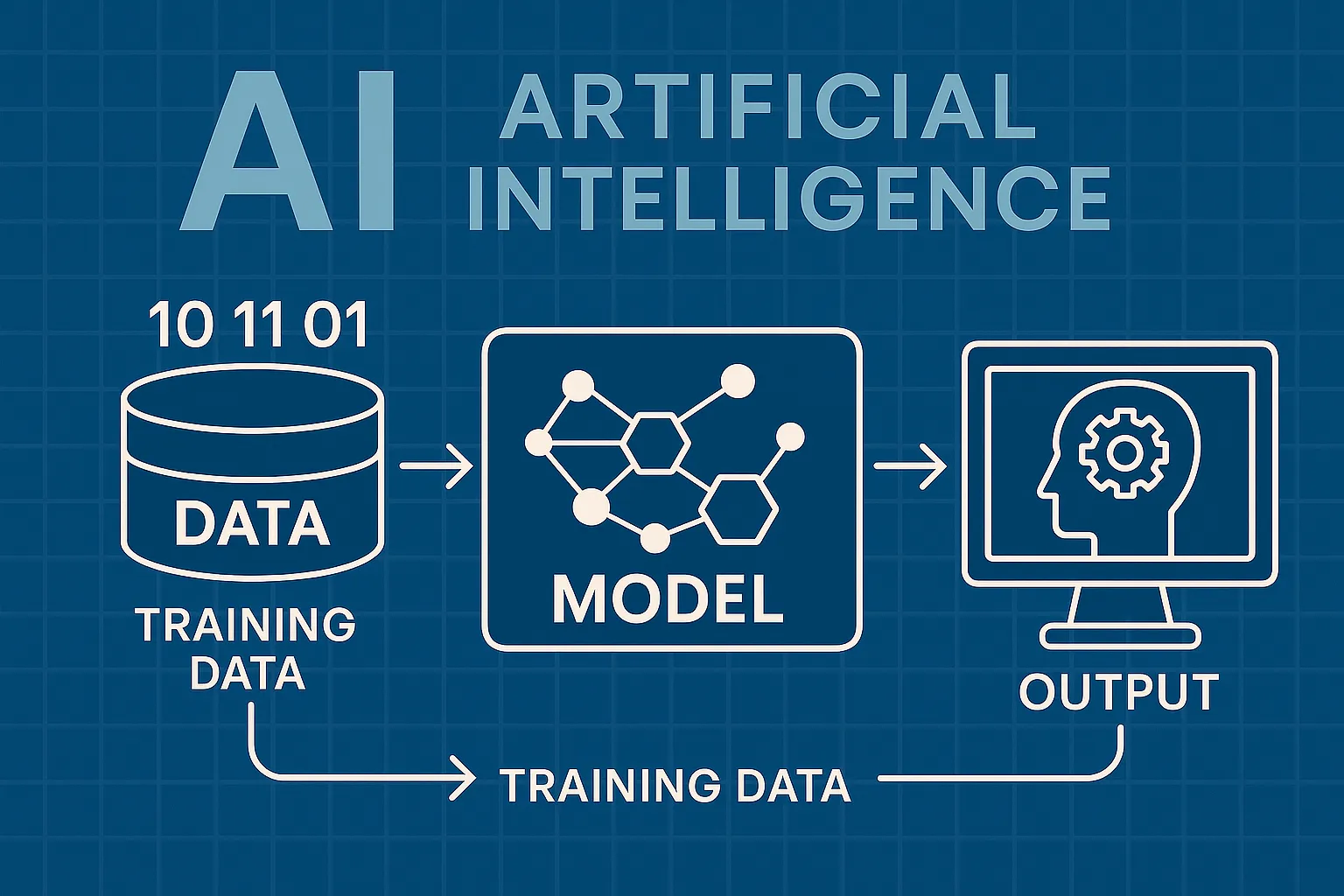
How AI Actually Works
Understand the basics of how AI systems learn, make decisions, and power tools like chatbots, image generators, and virtual assistants.

What Is Vibe Coding?
Discover the rise of vibe coding — an intuitive, aesthetic-first approach to building websites and digital experiences with help from AI tools.
7 Common Myths About AI
Think AI is conscious, infallible, or coming for every job? This post debunks the most widespread misconceptions about artificial intelligence today.

The Future of AI
From generative agents to real-world robotics, discover how AI might reshape society, creativity, and communication in the years ahead.
How AI Is Changing the Job Market
Will AI replace your job — or create new ones? Explore which careers are evolving, vanishing, or emerging in the AI-driven economy.
Common Issues with AI
Hallucinations, bias, privacy risks — learn about the most pressing problems in current AI systems and what causes them.