Great ad copy grabs attention, drives clicks, and converts customers—but crafting it consistently can be time-consuming. That’s where AI-powered ad copy generators come in. This page highlights the best AI tools for ad copywriting in 2026, comparing both free and paid platforms that help marketers, business owners, and creators write persuasive headlines, descriptions, CTAs, and product blurbs across channels. Whether you’re launching Meta ads, running Google campaigns, writing landing page copy, or planning a week of social posts, these tools use natural language processing to generate high-performing content quickly. Many now include brand voice controls, reusable templates for different industries, and workflows that produce multiple variants for A/B testing (or rapid creative iteration) without starting from scratch. We've evaluated each tool based on copy quality, usability, pricing, and marketing effectiveness. If you're looking to save time and scale your advertising efforts without sacrificing clarity or creativity, this guide covers the top AI solutions designed to help you write better ad copy—faster.
Top Paid AI Tools for Ad Copy & Campaigns
| Rank | Tool | Key Strength | Price / Limitations | Best Use Case |
|---|---|---|---|---|
| #1 | Jasper | Brand-voice ad copy + campaign workflows | Pro from $69/month | Teams running multi-channel campaigns |
| #2 | Copy.ai | Fast ad variations + GTM-focused automations | Paid plans from $49/month | Agencies & in-house performance marketers |
| #3 | Anyword | Predictive scoring for higher-converting copy | From $49/month | Data-driven ad testing and iteration |
| #4 | AdCreative.ai | Ad creatives + headlines/descriptions at scale | From $39/month | Creative production for Meta/Google ads |
| #5 | Persado | Enterprise experimentation + compliance-aware language AI | Enterprise only | Large brands optimizing messaging at scale |
Jasper
Jasper is one of the strongest all-in-one options for marketers who need consistent, on-brand ad copy across multiple channels. It’s built around marketing workflows, so you can generate punchy hooks, primary text, headlines, descriptions, landing page sections, and social captions while keeping everything aligned to a defined brand voice. That brand voice layer is the difference-maker for teams: instead of “generic AI copy,” you get outputs that match your product positioning, tone, and terminology from the first draft. Jasper is also useful for campaign production because it’s easy to create multiple variations for A/B testing—different angles, different audience pain points, different CTAs—without manually rewriting every line. If you’re running ads on Meta or Google while also posting on socials, Jasper helps you maintain consistent messaging across the entire funnel. It’s best for creators, freelancers, and marketing teams that want speed, structure, and reliable copy quality in a single platform.
Copy.ai
Copy.ai is a marketing-focused platform that’s especially good at producing lots of high-quality variations quickly—perfect when you’re testing new offers, new audiences, or new creative angles. Beyond standard “ad copy templates,” Copy.ai leans into go-to-market workflows that can help you scale repeatable tasks like producing multiple ad sets, rewriting copy for different personas, expanding short hooks into full landing sections, or turning product bullets into conversion-ready messaging. For social campaigns, it works well for caption packs, short-form hooks, and promo content that needs to stay crisp while still sounding natural. Teams like Copy.ai because it reduces the bottleneck between “idea” and “publishable drafts,” so you can ship more creative, faster. It’s a strong fit for agencies and in-house performance marketers who need consistency, speed, and enough flexibility to support everything from a single product launch to ongoing campaign refreshes month after month.
Anyword
Anyword stands out because it’s designed for performance marketers who want more than “nice-sounding copy.” Its big differentiator is predictive scoring and data-driven tooling that helps you choose which variants are more likely to perform before you spend money on distribution. In practice, you’ll generate multiple options for headlines, primary text, value props, and CTAs, then use Anyword’s performance-oriented features to refine the language toward clearer intent and higher conversion potential. This is especially useful for paid ads where small wording changes can impact CTR and CPA. Anyword is also strong for consistency across campaigns: you can keep a core message, then spin it into variations for different audiences (new customers vs. warm retargeting, budget buyers vs. premium buyers, etc.). If your workflow is heavy on testing, iteration, and optimizing ROI, Anyword is one of the most relevant paid tools in 2026 for ad copy specifically.
AdCreative.ai
AdCreative.ai is built for marketers who need creative volume—fast. While many tools focus mainly on text, AdCreative.ai is centered on producing ad-ready creative assets and the supporting copy (headlines and descriptions) so you can test more combinations without hiring extra design help. That’s valuable for Meta and Google campaigns where creative fatigue is real and frequent refreshes are necessary to maintain performance. It’s also helpful for smaller teams because it reduces production time: you can generate multiple creative directions, pair them with different messaging angles, and quickly create a batch of variations for testing. Even if you already have a design workflow, AdCreative.ai can act like an accelerator—producing quick drafts, alternate formats, and new ad angles when you’re stuck or short on time. If your goal is to scale creative testing and keep campaigns fresh, it’s one of the most practical “production” tools in this category.
Persado
Persado is a premium, enterprise-focused platform for brands that treat language as a measurable growth lever. Instead of simply generating copy, Persado is designed around large-scale experimentation, personalization, and compliance-aware messaging—useful in regulated industries or any organization with strict brand and legal review requirements. The platform emphasizes systematic testing: generate variants, learn what resonates, and improve outcomes across channels like email, paid ads, and on-site messaging. Where Persado shines is in organizations that run high volume campaigns and need rigorous controls—governance, approvals, and consistency—without slowing down the experimentation cycle. If you’re a large brand running national or global campaigns and want a structured way to continuously optimize language, Persado is one of the most established tools for scaling message testing and performance improvement beyond what a general-purpose AI writer can reliably provide.
Top Free AI Tools for Ad Copy & Social Media
| Rank | Tool | Key Strength | Limitations | Best Use |
|---|---|---|---|---|
| #1 | ChatGPT (Free) | Ad angles, hooks, captions, and variants | No built-in campaign management or testing | Rapid drafting and creative brainstorming |
| #2 | Google Gemini (Free) | Fast copy drafts + rewriting for tone | Output quality depends heavily on prompts | Caption rewrites and quick ad iterations |
| #3 | Microsoft Copilot (Free) | Structured outlines + multi-variant copy | Limited marketing templates vs paid suites | Generating multiple headlines/CTAs quickly |
| #4 | Canva (Free) | Social post creation with built-in AI writing | AI features are limited on the free plan | Social graphics + caption starter drafts |
| #5 | Copy.ai (Free Tier) | Marketing templates for hooks and ads | Usage caps and feature limits | Quick template-based ad copy generation |
ChatGPT (Free)
ChatGPT is one of the most useful free tools for marketers who need ideas on demand. Even without a dedicated “ad manager” interface, it’s excellent for generating hooks, rewriting headlines, creating different messaging angles, and producing short-form social captions that match a specific tone (bold, playful, premium, direct-response, etc.). You can prompt it with your product, audience, offer, and constraints (character limits, platform rules, banned words, required claims), then ask for multiple variants to support fast A/B testing. It’s especially strong for breaking creative blocks: give it your current ad copy and ask for 20 alternatives that focus on different pain points or benefits. The free version is best treated like a creative partner for drafting and iteration—not a full campaign suite—so you’ll still manage testing, tracking, and performance analysis in your ad platform. But for pure speed and flexibility, it’s one of the best “free” starting points in 2026 for ad copy ideation and rapid output.
Google Gemini (Free)
Google Gemini is a solid free option for quick ad copy drafts, caption rewrites, and tone adjustments—especially when you want multiple variations without a lot of setup. It works well for turning rough notes into cleaner marketing copy, rewriting text for different audiences (cold traffic vs. retargeting), and generating short-form copy for social posts where clarity matters more than long-form storytelling. Gemini is also helpful for “iteration loops”: paste in an existing headline and ask for 15 alternatives in different styles, or provide a product feature list and ask for benefit-first ad lines and CTAs. Like most free tools, the quality depends heavily on how specific your prompt is—best results come from clear constraints (platform, audience, offer, voice, and the single action you want users to take). If you want a fast, no-cost assistant for everyday drafting and rewriting, Gemini can be a reliable part of your workflow.
Microsoft Copilot (Free)
Microsoft Copilot is a practical free tool for creating structured ad copy packs—multiple headlines, multiple descriptions, and CTA variations—in a single pass. It’s especially useful when you want the AI to follow a format: for example, “10 headline options under 30 characters” plus “5 primary text options under 125 characters” plus “5 CTAs.” That kind of structured output makes it easier to paste directly into Meta or Google Ads without constant trimming. Copilot also works well for turning a single product message into several audience-specific versions, such as “busy parents,” “students,” or “budget-conscious shoppers.” While it doesn’t replace specialized marketing platforms with brand governance, built-in testing, or workflow automation, it’s a strong free assistant for producing lots of usable variants quickly. If your goal is volume and structure—especially for short-form ad placements—Copilot is a great free add-on in 2026.
Canva (Free)
Canva is best known for design, but it’s also extremely useful for social campaigns because it combines creative production and lightweight copywriting in one place. On the free plan, you can still build social graphics, simple ad visuals, and post templates quickly—then pair them with AI-assisted caption starters and headline ideas to keep your content moving. This is ideal if you’re a creator, small business, or solo marketer who needs “good enough” creative fast without managing separate tools for writing and design. Canva also helps with consistency: once you create a template style, you can produce a week’s worth of posts with matching visuals while testing different copy angles. The biggest limitation is that advanced AI features and higher-volume usage are often gated behind paid tiers, and Canva isn’t a specialized performance ad platform. But for organic social, basic promotional creatives, and rapid content packaging, Canva remains one of the most practical free tools available.
Copy.ai (Free Tier)
The free tier of Copy.ai is a strong option for template-based ad copy generation when you want fast results with minimal prompting. Instead of writing a long prompt from scratch, you can start from proven marketing frameworks and generate hooks, product blurbs, short ad text, and caption ideas in seconds. It’s especially useful for small businesses and freelancers who need a steady stream of promotional copy but don’t want to pay for a full marketing suite yet. You can use it to create multiple variants for the same offer—different tones, different angles, different benefit emphasis—then pick the best options to test in ads or social posts. The obvious limitation is usage caps and feature restrictions: heavy users will outgrow it quickly, and advanced workflow automation is typically paid. Still, as a “starter engine” for producing ad-ready copy and social hooks on a budget, Copy.ai’s free tier remains one of the more practical choices in 2026.
Rankings

Chatbots
AI chatbots have quickly evolved from simple assistants into powerful, multi-purpose tools used by millions of people every day...

Image Generators
AI image generators are revolutionizing the way creatives, marketers, and developers produce visual content by transforming text prompts into detailed, customized...
Writing Assistants
AI writing assistants have become indispensable tools for anyone who writes — from students and bloggers to business professionals and marketers...

Deepfake Detection
As deepfake technology becomes more advanced and accessible, detecting AI-manipulated content is now a critical challenge across journalism, education, law, and...
Productivity & Calendar
AI productivity and calendar tools have become essential for professionals, entrepreneurs, and students looking to make the most of their time without getting overwhelmed...
Natural Language To Code
Natural language to code tools are transforming software development by enabling users to build apps, websites, and workflows without needing advanced programming...
Blog
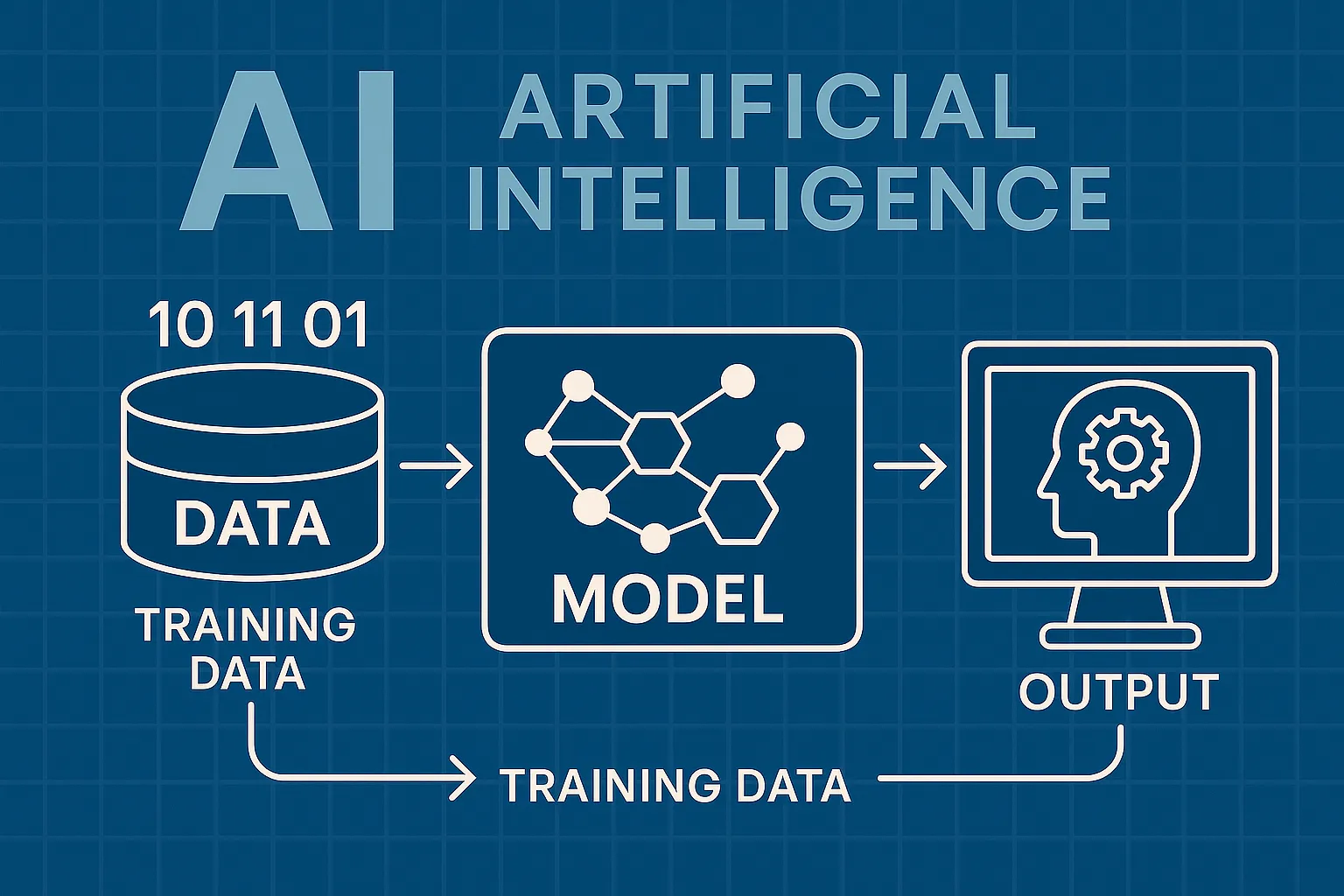
How AI Actually Works
Understand the basics of how AI systems learn, make decisions, and power tools like chatbots, image generators, and virtual assistants.

What Is Vibe Coding?
Discover the rise of vibe coding — an intuitive, aesthetic-first approach to building websites and digital experiences with help from AI tools.
7 Common Myths About AI
Think AI is conscious, infallible, or coming for every job? This post debunks the most widespread misconceptions about artificial intelligence today.

The Future of AI
From generative agents to real-world robotics, discover how AI might reshape society, creativity, and communication in the years ahead.
How AI Is Changing the Job Market
Will AI replace your job — or create new ones? Explore which careers are evolving, vanishing, or emerging in the AI-driven economy.

Common Issues with AI
Hallucinations, bias, privacy risks — learn about the most pressing problems in current AI systems and what causes them.