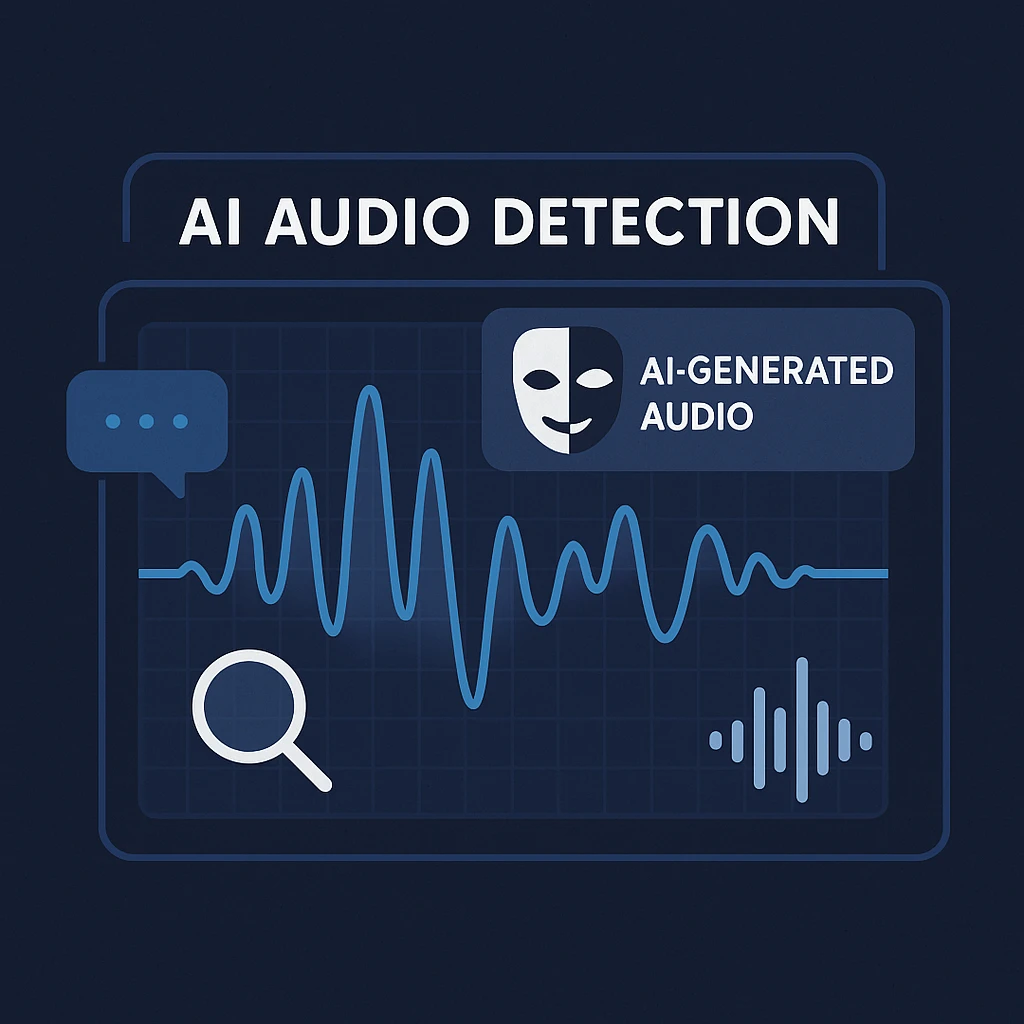
As AI-generated voices and synthetic speech become increasingly realistic, the need for reliable AI audio detectors is more important than ever. This page compares the top AI audio detection tools—both free and paid—that help users verify whether an audio clip was produced by a human or an AI system. These tools are vital for educators, legal professionals, media analysts, and anyone concerned about deepfakes, voice cloning, or authenticity in audio content. Whether you're analyzing voiceovers, podcast segments, or spoken responses in academic settings, these platforms use advanced machine learning to assess patterns, pitch, timing, and other acoustic signals that can reveal AI involvement. We've evaluated each tool based on accuracy, ease of use, pricing, and compatibility with different file formats and platforms. Many also offer free trials or limited-use plans, allowing you to test before you commit. In 2026, strong detectors increasingly combine forensic scoring with provenance signals (like watermark checks) to help teams make more defensible decisions. Explore the best AI audio detectors of 2026 to ensure your audio content remains trustworthy, transparent, and secure.
Best Paid AI Audio Detectors
| Rank | Tool | Focus | Price | Use Case |
|---|---|---|---|---|
| #1 | Pindrop® Pulse | Real-time audio deepfake detection | Enterprise | Call centers, fraud prevention |
| #2 | Reality Defender RealScan | Audio + multi-media deepfake verification | Paid plans (free tier available) | Investigations, moderation, compliance |
| #3 | Hive AI Detection API | AI-generated audio & deepfake classification | Usage-based / custom | Platforms, publishers, trust & safety |
| #4 | Sensity AI | Forensic-grade detection + reporting | Contact sales | Legal, government, evidence review |
| #5 | Deep Media | Content forensics, analysis & tracing | Custom pricing | Enterprises, OSINT, risk teams |
Pindrop® Pulse
Pindrop® Pulse is a modern, enterprise-focused solution designed specifically to detect audio deepfakes and synthetic voices in real time. It’s built for high-risk environments such as contact centers, financial institutions, insurance providers, and customer support operations where impersonation scams can lead to immediate losses. Pulse evaluates speech patterns and acoustic signals that often reveal generation artifacts—such as unusual spectral behavior, timing inconsistencies, and synthesis “texture” that can be difficult for humans to hear reliably. A major advantage is speed: the product is positioned as being able to surface deepfake risk quickly enough to support agent decision-making during a live interaction. For organizations that want detection as part of an end-to-end voice security stack, Pulse pairs well with broader fraud defense and authentication workflows.
Reality Defender RealScan
Reality Defender RealScan is a strong option for teams that need defensible deepfake verification across multiple media types, including audio. Instead of focusing only on one vendor’s voice engine, it’s built as a general-purpose detection layer that can support analysts, investigators, moderators, and compliance teams who regularly review suspicious clips. Users can upload audio for quick verification, and organizations can also integrate detection into products via API/SDK workflows when they need automated screening at scale. Reality Defender is particularly useful when your workflow requires consistent results across mixed content—voice notes, interview recordings, social media clips, and user submissions—without forcing your team to juggle separate tools. The combination of usability and integration options makes it a practical “daily driver” for authenticity checks in 2026.
Hive AI Detection API
Hive’s AI Detection API is designed for platforms that need to classify AI-generated content at scale, including synthetic audio and deepfake speech. Rather than acting as a single “upload and verdict” tool, Hive is positioned as infrastructure: you send audio through an API, receive confidence scores, and route results into moderation queues, risk scoring, trust signals, or enforcement systems. This is especially valuable for marketplaces, social platforms, media publishers, and enterprises that handle large volumes of content and want consistent detection output across multiple formats. Hive’s strength is operational fit—fast responses, clear scoring, and integration friendliness—so teams can build automated workflows around “likely AI” vs “likely human” audio. If your priority is scalable detection with stable developer tooling, Hive is one of the most relevant paid options in 2026.
Sensity AI
Sensity AI is built for high-stakes deepfake detection where the goal isn’t just to guess, but to support investigations with forensic-style assessment and reporting. While it’s well known for synthetic media intelligence across images and video, it also supports audio deepfake analysis—useful for verifying evidence, investigating impersonation attempts, or analyzing suspicious recordings tied to fraud and misinformation. Sensity is a strong fit for government, legal, and corporate security teams that need more than a simple probability number. Its value is in workflow readiness: fast triage when needed, deeper analysis when required, and outputs that can be documented for internal review or case files. For organizations that need “court-ready” thinking and repeatable methodology, Sensity is one of the most defensible paid choices.
Deep Media
Deep Media focuses on foundational AI for digital safety, offering tools that help identify and analyze manipulated or synthetic content, including AI-generated audio. This makes it appealing to enterprises and OSINT-style teams that need broad coverage across formats and want to understand how a piece of content may have been altered, generated, or repackaged. In practical terms, Deep Media is best for organizations that care about brand risk, disinformation response, executive impersonation threats, and ongoing monitoring—situations where “is this fake?” is only the starting point and teams also want traceability and context. Because deployments and needs vary widely, pricing is typically custom. If you want an enterprise relationship with a vendor focused on large-scale content safety and forensic signals, Deep Media is a serious contender for 2026.
Best Free AI Audio Detectors
| Rank | Tool | Focus | Limitations | Notes |
|---|---|---|---|---|
| #1 | Resemble Detect | Audio deepfake scanner | Free tier limits usage | Fast results + confidence scoring |
| #2 | ElevenLabs Speech Classifier | Detects ElevenLabs-generated audio | Best for ElevenLabs origin checks | Useful for vendor-specific verification |
| #3 | Hive Detect | AI-generated media detection (incl. audio) | May require account for full access | Great for quick multi-format checks |
| #4 | Deepware Scanner | Deepfake scanning (audio in video) | Optimized for video links/uploads | Handy for social/video workflows |
| #5 | DeepFake-o-meter | Research-grade media detection (incl. audio) | Academia-focused; clunky UI | Transparent + multi-model testing |
Resemble Detect
Resemble Detect is one of the most practical “free-first” tools for scanning suspicious audio and estimating whether it was generated or manipulated by AI. It’s designed around the real-world workflow most people need: upload or submit your clip, get a verdict with a confidence score, and move on quickly—without setting up complex forensic software. Resemble’s detection models look for patterns that commonly appear in synthetic speech, including subtle frequency artifacts, unnatural transitions, and telltale synthesis texture that doesn’t match typical human recordings. The free tier is best for spot-checking shorter clips or occasional investigations, while heavier users may need to upgrade. For journalists, educators, podcasters, and everyday users who want a reliable “first pass” audio deepfake check in 2026, Resemble Detect remains one of the strongest free options.
ElevenLabs Speech Classifier
ElevenLabs’ AI Speech Classifier is a specialized tool that helps determine whether an audio sample was generated using ElevenLabs. This is especially useful in 2026 because vendor-specific verification is often more reliable than “generic” detection—if you suspect a clip originated from a particular TTS system, the best check is frequently the tool built by that provider. The classifier returns a probability score and is easy to use for quick authenticity checks on voice notes, voiceovers, and suspicious clips circulating online. While it’s not designed to reliably detect audio created by other vendors, it excels at the role it was built for: verifying (or disputing) ElevenLabs origins and reducing ambiguity around attribution. For creators, platforms, and listeners dealing with ElevenLabs-style voice cloning risks, this remains a top free resource.
Hive Detect
Hive Detect is a convenient web-based option for checking whether media appears AI-generated, and it includes support for audio alongside images and video. This makes it particularly useful when your workflow involves mixed content—like a clip that’s been reposted with a new voiceover, a social post with stitched audio, or user submissions that vary widely in format. Hive is known for producing clear, easy-to-interpret confidence scoring, which helps non-technical users decide whether something deserves deeper review. Access and limits can vary depending on how Hive is offering public usage at any given time, but as a “quick check” tool it’s one of the most relevant free-friendly options in 2026. If you want a simple interface that still feels modern and reliable, Hive Detect is a strong pick for everyday verification.
Deepware Scanner
Deepware Scanner is a useful free tool when your suspicious audio is embedded inside a video—common in scam clips, social posts, “leaked call” videos, or screen recordings. Instead of forcing you to isolate audio first, it lets you scan a video link or upload media directly, then assesses whether the content shows signs of synthetic manipulation. That makes it practical for creators, moderators, and investigators who are working with platform-native formats. While it’s primarily optimized for video workflows (and detection quality can vary depending on the source and compression), it’s still a valuable free option for triage—especially when you need a fast signal on whether a piece of content is worth escalating. For quick checks on public clips in 2026, Deepware Scanner can be a handy tool to keep in your verification toolkit.
DeepFake-o-meter
Developed by the University at Buffalo’s Media Forensics Lab, DeepFake-o-meter is a research-oriented platform that supports synthetic media detection across images, video, and audio. The standout benefit is transparency: instead of hiding everything behind a single “black box” verdict, it’s designed to help users experiment with multiple detection approaches and better understand how classifiers behave on different inputs. That makes it especially valuable for students, educators, and technically curious users who want to compare detection models and see how results vary by clip quality, compression, noise, and content type. The interface can feel academic and less polished than commercial tools, but the tradeoff is credibility and insight. If you want a free tool that’s more open and educational—rather than purely productized—DeepFake-o-meter remains one of the best options available in 2026.
Rankings

Chatbots
AI chatbots have quickly evolved from simple assistants into powerful, multi-purpose tools used by millions of people every day...

Image Generators
AI image generators are revolutionizing the way creatives, marketers, and developers produce visual content by transforming text prompts into detailed, customized...

Writing Assistants
AI writing assistants have become indispensable tools for anyone who writes — from students and bloggers to business professionals and marketers...
Deepfake Detection
As deepfake technology becomes more advanced and accessible, detecting AI-manipulated content is now a critical challenge across journalism, education, law, and...
Productivity & Calendar
AI productivity and calendar tools have become essential for professionals, entrepreneurs, and students looking to make the most of their time without getting overwhelmed...
Natural Language To Code
Natural language to code tools are transforming software development by enabling users to build apps, websites, and workflows without needing advanced programming...
Blog
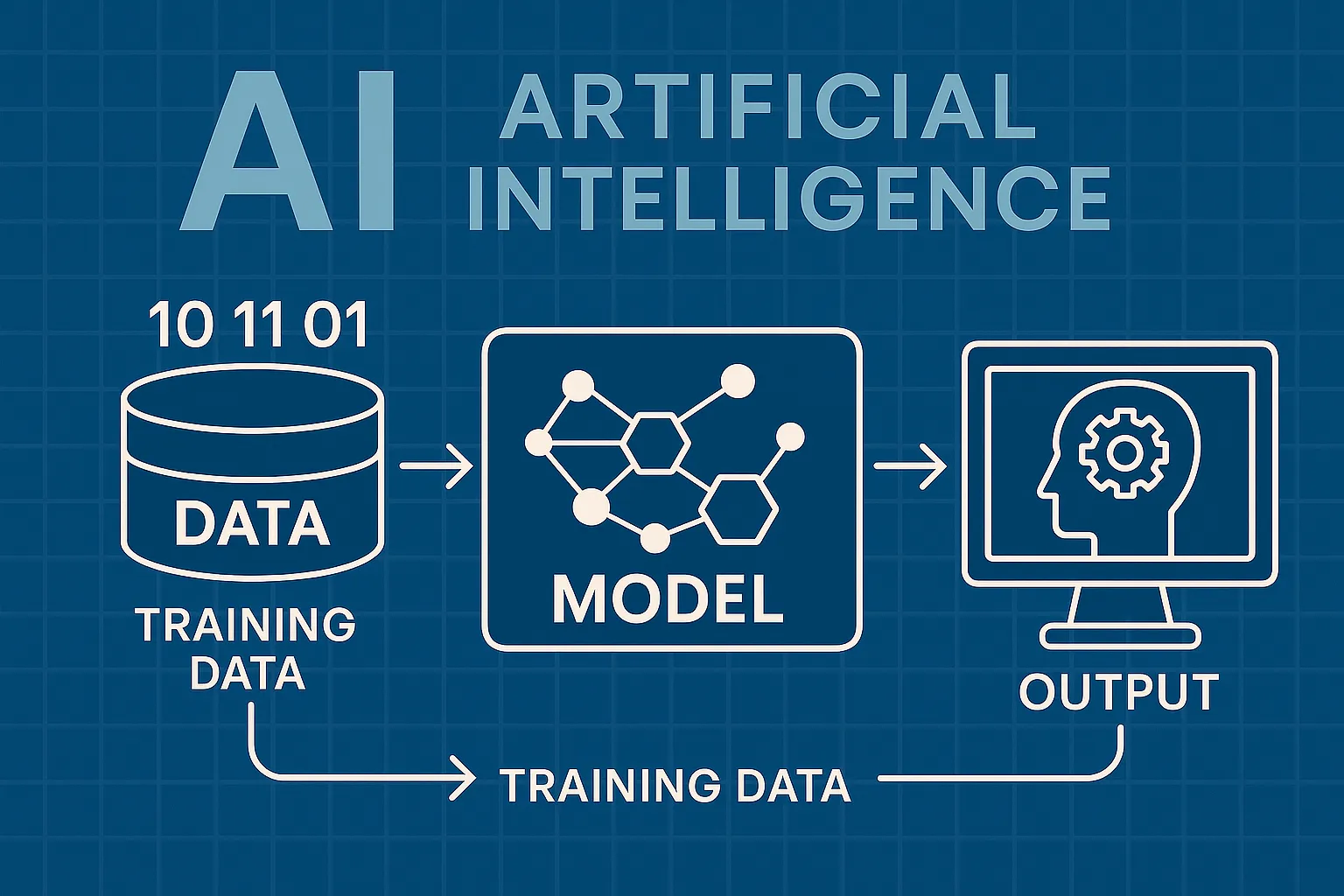
How AI Actually Works
Understand the basics of how AI systems learn, make decisions, and power tools like chatbots, image generators, and virtual assistants.

What Is Vibe Coding?
Discover the rise of vibe coding — an intuitive, aesthetic-first approach to building websites and digital experiences with help from AI tools.
7 Common Myths About AI
Think AI is conscious, infallible, or coming for every job? This post debunks the most widespread misconceptions about artificial intelligence today.

The Future of AI
From generative agents to real-world robotics, discover how AI might reshape society, creativity, and communication in the years ahead.
How AI Is Changing the Job Market
Will AI replace your job — or create new ones? Explore which careers are evolving, vanishing, or emerging in the AI-driven economy.

Common Issues with AI
Hallucinations, bias, privacy risks — learn about the most pressing problems in current AI systems and what causes them.