If you're building software that leverages artificial intelligence, choosing the right AI API can make or break your project. This page ranks the best AI APIs available today—covering both paid and free options—designed to help developers integrate powerful AI capabilities into apps, platforms, and workflows. Whether you need natural language processing, text generation, image recognition, speech synthesis, or agent-style automation, these APIs offer scalable, cloud-based solutions with fast response times and flexible pricing. We've compared each API based on performance, documentation quality, ease of integration, reliability, and developer support so you can quickly find the best fit for your tech stack. Many of the options listed include free tiers or trial credits, making it easy to experiment before committing to a paid plan. From startups and indie developers to enterprise teams, these AI APIs empower you to build smarter, more dynamic applications—without reinventing infrastructure from scratch. Explore the top API providers for AI in 2026 and start bringing advanced intelligence into your projects today.
Top Paid AI APIs
| Rank | API | Primary Capability | Pricing | Best For |
|---|---|---|---|---|
| #1 | OpenAI API | LLMs, images, speech, agents | Pay-as-you-go | Production apps & assistants |
| #2 | Amazon Bedrock | Multi-model LLM access + tools | Usage-based | Enterprise AWS deployments |
| #3 | Google Vertex AI | Gemini models + ML platform | Usage-based | Search, apps, and ML pipelines |
| #4 | Anthropic API (Claude) | Long-context reasoning + chat | Token-based | Knowledge-heavy workflows |
| #5 | Azure OpenAI Service | LLMs via Azure governance | Usage-based | Compliance-first organizations |
OpenAI API
The OpenAI API is a top choice for developers who want a single, cohesive platform for modern AI features—high-quality text generation, multimodal reasoning, image generation, and speech capabilities—without needing to stitch together multiple vendors. It’s widely adopted because the developer experience is straightforward: clean docs, predictable endpoints, strong SDK support, and a huge ecosystem of examples and integrations. If you’re building a customer-facing assistant, an internal productivity agent, an AI writing workflow, or an app that needs reliable outputs at scale, OpenAI’s tooling makes production deployment simpler. It’s especially strong for teams that care about fast iteration, strong model quality, and broad feature coverage under one roof.
Amazon Bedrock
Amazon Bedrock is built for teams already running on AWS who want enterprise-grade AI with governance, security, and scalable infrastructure baked in. Instead of being locked into a single model provider, Bedrock is designed as a managed layer for working with multiple foundation models while keeping identity, permissions, and monitoring aligned with your existing AWS setup. For larger teams, this matters: you can standardize how your company accesses models, log and control usage, and integrate AI into backend services without introducing a separate platform to manage. It’s a strong fit for production workloads where reliability, compliance, and cloud-native integration are non-negotiable.
Google Vertex AI
Vertex AI is Google’s unified platform for building with foundation models and deploying ML at scale, making it ideal when you want both cutting-edge generative capabilities and a full lifecycle ML toolset. Developers often choose Vertex AI for its tight integration with Google Cloud services, strong data tooling, and the ability to combine classic ML workflows with Gemini-powered generative endpoints. It works well for applications that rely on search, recommendation-style personalization, analytics-heavy pipelines, or large datasets living in Google Cloud. If you’re aiming for a “serious” production setup with monitoring, evaluation, and scalable deployment patterns, Vertex AI is one of the most complete options.
Anthropic API (Claude)
Anthropic’s Claude API is popular for teams that prioritize long-context reasoning, careful tone, and higher trust outputs for business workflows. It’s particularly useful in knowledge management, document-heavy assistants, analysis tools, and situations where you need the model to follow instructions closely while staying consistent over longer conversations. Developers like it because the docs are clear, the API surface is focused, and it’s easy to build systems that summarize, rewrite, classify, or extract structured data from large inputs. If your use case involves longer documents, policy-constrained outputs, or “assistant-style” experiences that should feel calm and reliable, Claude is a strong paid option to benchmark against.
Azure OpenAI Service
Azure OpenAI Service is a best-fit choice when your team needs strong governance, enterprise controls, and the ability to deploy AI inside Microsoft’s cloud ecosystem. Many organizations prefer it for security reviews, compliance processes, and centralized administration—especially when the rest of their infrastructure already lives in Azure. From a developer perspective, it’s attractive because you can integrate AI features while keeping identity and access management, networking policies, logging, and monitoring aligned with existing Azure standards. If you’re building AI into corporate environments where procurement and security requirements are strict, Azure OpenAI is often the smoothest path to production.
Top Free AI APIs
| Rank | API | Use Case | Free Tier Limits | Best For |
|---|---|---|---|---|
| #1 | Google Gemini API | Text + multimodal generation | Free quota (rate-limited) | Fast prototypes & MVPs |
| #2 | Cloudflare Workers AI | Edge inference (text/vision/audio) | Free daily allocation | Low-latency edge apps |
| #3 | Groq API | Ultra-fast LLM inference | Free plan (rate-limited) | Speed-critical demos |
| #4 | Hugging Face Inference API | Hosted open-source model access | Limited usage (plan-dependent) | Trying open-source models quickly |
| #5 | Deepgram API | Speech-to-text + voice features | Free trial credits (new accounts) | Voice apps & transcription |
Google Gemini API
The Gemini API is one of the best “free-to-start” options for developers who want strong model quality without committing to an enterprise platform on day one. It’s built for rapid experimentation and supports the kinds of tasks most developers actually need when prototyping: generating copy, rewriting text, extracting structured data, summarizing documents, and handling multimodal prompts depending on the model. Because the free tier is rate-limited, it’s ideal for early MVPs, hackathons, and lightweight apps where you want quick iteration and a clean developer experience. If your project grows, it also scales naturally into more robust Google Cloud workflows, which makes it a smart place to start when you want a realistic path from prototype to production.
Cloudflare Workers AI
Cloudflare Workers AI is a standout free option when you want to run AI close to users—at the edge—without standing up servers or managing GPUs. It’s especially useful for latency-sensitive experiences like lightweight text generation, classification, moderation, embeddings, or simple image tasks that benefit from being executed near the request. The platform fits naturally into the Workers ecosystem, so you can combine AI calls with caching, routing, auth, and rate limiting in one place. For developers who want a low-maintenance API that can be deployed globally with minimal ops overhead, Workers AI is one of the most practical free tiers available in 2026.
Groq API
Groq’s API is popular for one main reason: speed. If you’re building interactive demos where responsiveness matters—live assistants, autocomplete-style UX, rapid iteration tools, or anything that feels “real-time”—Groq can make your app feel dramatically snappier compared to slower inference. The free plan is rate-limited, but it’s still extremely valuable for prototypes, internal tools, and proof-of-concepts where you want users to feel instant feedback. It’s also a great benchmarking API: even if you don’t ship on it long-term, testing your prompts on Groq helps you understand what “fast inference” can look like and how it impacts UX and retention.
Hugging Face Inference API
Hugging Face’s Inference API is a go-to resource for developers who want quick access to open-source models without provisioning infrastructure. It’s especially helpful when you need to test emerging models, compare architectures, or experiment with niche capabilities that aren’t always offered by the big commercial providers. You can prototype tasks like classification, embeddings, summarization, and lightweight generation in a way that feels simple and developer-friendly. Since limits depend on plan and workload, it’s best used for experimentation, model evaluation, and early-stage features where you want to validate value before investing in dedicated hosting or a higher-usage plan.
Deepgram API
Deepgram is an excellent free-to-try option for developers building anything with audio: call transcription, meeting notes, podcast tooling, voice assistants, and voice analytics. The API is designed for practical production use cases—streaming transcription, batch processing, speaker separation, and structured outputs—while remaining straightforward to integrate with modern web stacks. The availability of trial credits makes it easy to test real workloads without committing upfront, and the developer documentation is clear enough that you can go from “hello world” to a working prototype quickly. If your product roadmap involves voice features at any point, Deepgram is one of the best APIs to evaluate early.
Rankings

Chatbots
AI chatbots have quickly evolved from simple assistants into powerful, multi-purpose tools used by millions of people every day...

Image Generators
AI image generators are revolutionizing the way creatives, marketers, and developers produce visual content by transforming text prompts into detailed, customized...

Writing Assistants
AI writing assistants have become indispensable tools for anyone who writes — from students and bloggers to business professionals and marketers...

Deepfake Detection
As deepfake technology becomes more advanced and accessible, detecting AI-manipulated content is now a critical challenge across journalism, education, law, and...
Productivity & Calendar
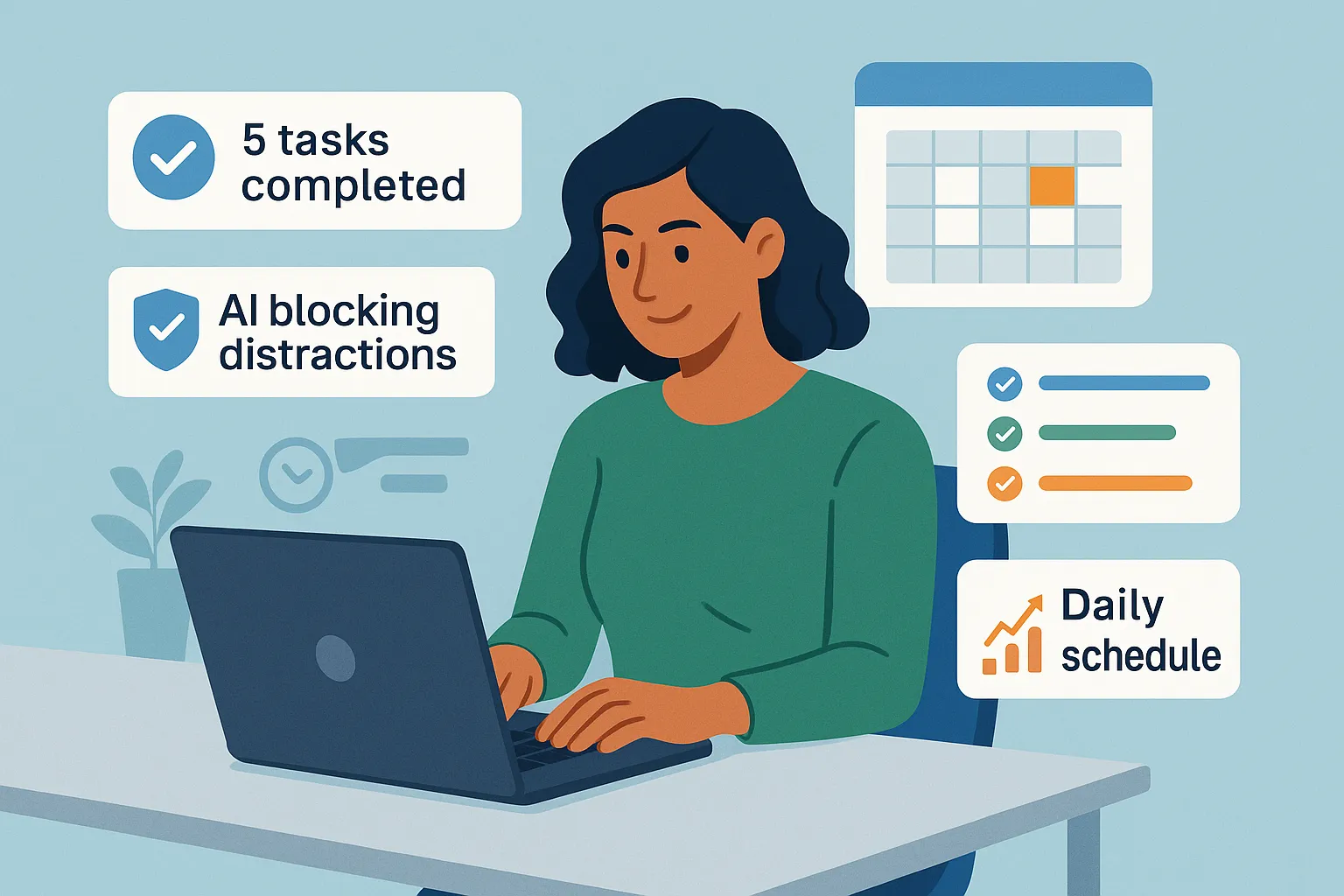
AI productivity and calendar tools have become essential for professionals, entrepreneurs, and students looking to make the most of their time without getting overwhelmed...
Natural Language To Code
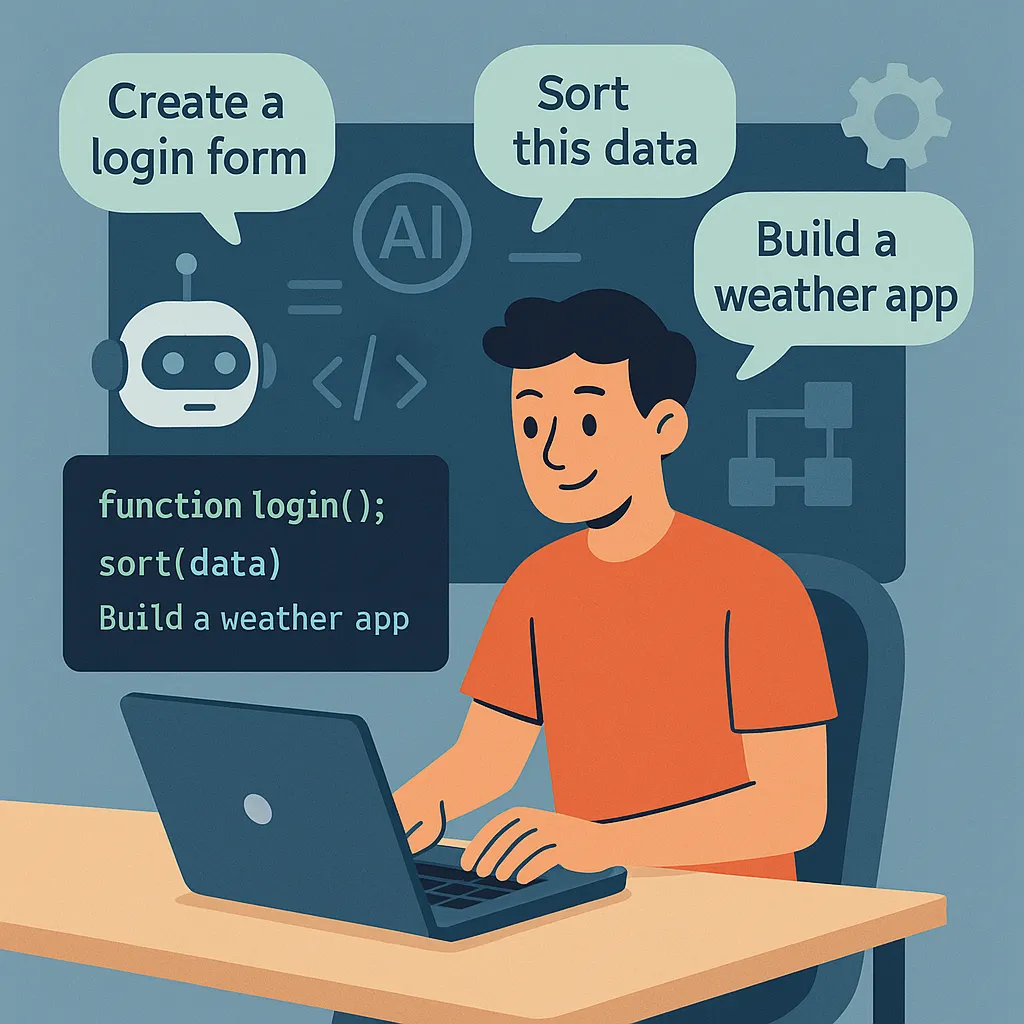
Natural language to code tools are transforming software development by enabling users to build apps, websites, and workflows without needing advanced programming...
Blog
How AI Actually Works
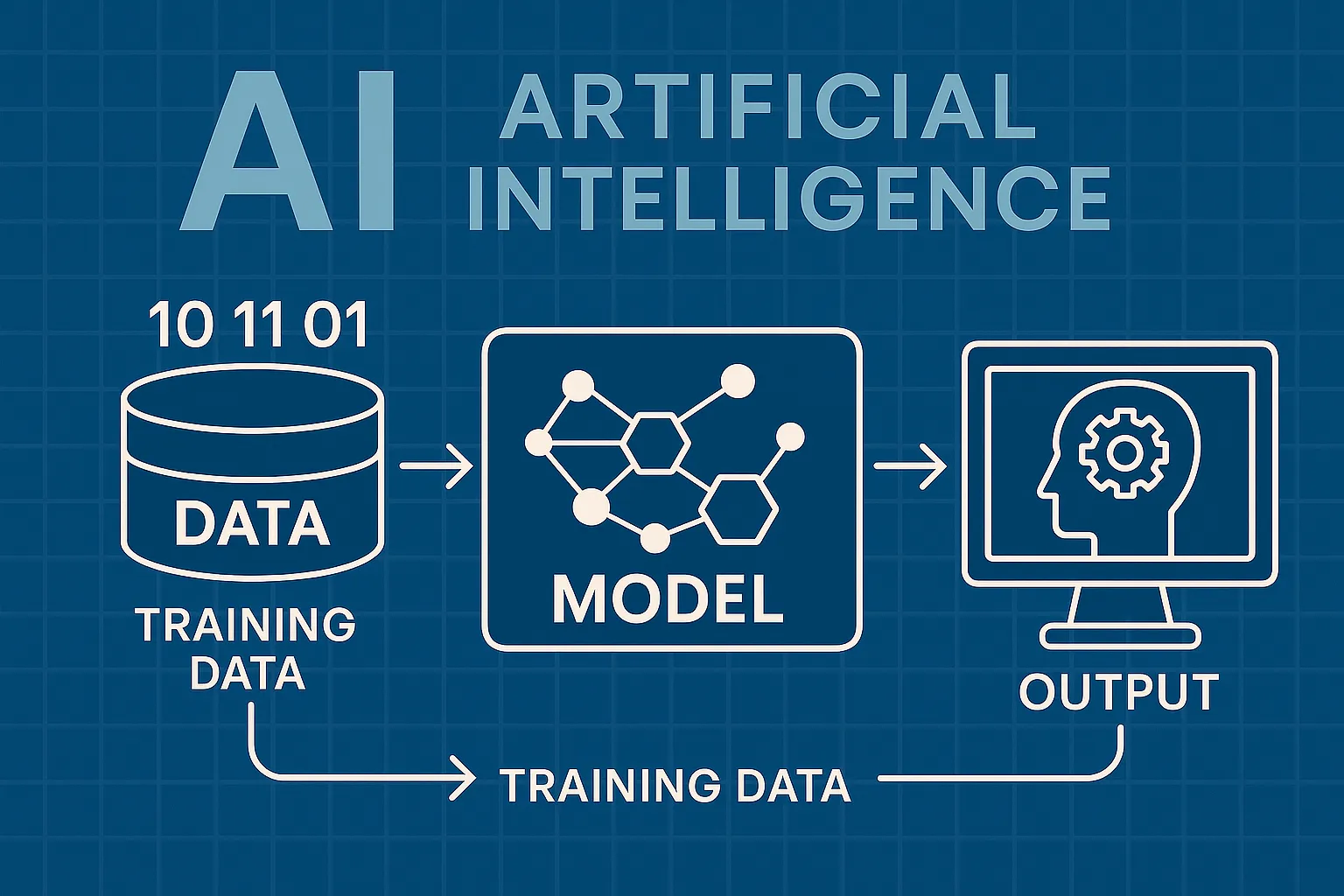
Understand the basics of how AI systems learn, make decisions, and power tools like chatbots, image generators, and virtual assistants.

What Is Vibe Coding?
Discover the rise of vibe coding — an intuitive, aesthetic-first approach to building websites and digital experiences with help from AI tools.

7 Common Myths About AI
Think AI is conscious, infallible, or coming for every job? This post debunks the most widespread misconceptions about artificial intelligence today.

The Future of AI
From generative agents to real-world robotics, discover how AI might reshape society, creativity, and communication in the years ahead.
How AI Is Changing the Job Market
Will AI replace your job — or create new ones? Explore which careers are evolving, vanishing, or emerging in the AI-driven economy.

Common Issues with AI
Hallucinations, bias, privacy risks — learn about the most pressing problems in current AI systems and what causes them.